REVIEW · PORTLAND
Ultimate Portland Self-Guided Driving GPS Audio Tour
Book on Viator →Operated by Guide With Action · Bookable on Viator
Portland by car gets a lot easier when your narration keeps pace with your route. This self-guided driving GPS audio tour uses your phone location to play stories hands-free as you pass sights, so you can focus on the streets and views instead of the map. I especially like the offline maps (no signal needed after downloading) and the way the stories keep the drive moving with clear context.
You’re looking at an easy hit list: about 12+ miles and more than 33 audio stories, designed for roughly 1–2 hours. Price is also friendly: $16.99 per group (up to 4), which often makes it less costly than paying per person for a guided option. One thing to keep in mind: if you miss the route, go much slower/faster than typical, or run into a road closure, the audio can lose sync and you may need to re-find the next landmark.
This is a good match if you want Portland’s big-name spots plus a few “wait, that explains it” moments—without coordinating with a bus schedule. Do it on a day when you have a car handy, and plan a little buffer for parking and traffic at the busiest historic stretches.
In This Review
- Key things I’d bet on before you go
- Why Portland works so well as a GPS audio driving loop
- Price and value: $16.99 per group is the real hook
- Getting started at Visit Portland Maine Information Center (Ocean Gateway Pier)
- West Street highlights: Maine Medical Center, Victoria Mansion, and Prohibition’s shadow
- Maine Medical Center and the Barbara Bush Children’s Wing
- Victoria Mansion: Ruggles Morse and Queen Victoria
- Colorful servant rowhouses and why brick won out
- Casco Bay harbor logic: deep water, tides, and winter freeze
- Neal Dow’s home and the father of American Prohibition
- Arts District and Portland Art Museum up ahead
- Brown Street to City Hall: Longfellow’s roots and Portland’s church-and-city spine
- Wadsworth Longfellow House: Portland’s oldest brick house
- Oldest church: 1st Parish Unitarian Universalist Church
- Portland City Hall and the fire-rebuilt pattern
- Franklin Tower, Eastern Cemetery, and the shipping-view rule of the 1800s
- Franklin Tower: Maine’s tallest
- Eastern Cemetery: markers back to 1768
- Spring Point Ledge and the “can’t be seen until…” rule
- Waterville to Munjoy: triple-deckers, the harbor edge, and a Portland promenade break
- Waterville Street: flattop triple-deckers
- Munjoy Street: Portland Harbor in Casco Bay
- Eastern Promenade and East End Beach
- Walnut Street to Fort Williams Park: forts, bridges, Meetinghouse Hill, and military installations
- Green space shaped by the British attack (1775)
- Fore, Middle, and Back: street names tied to water
- Casco Bay Bridge: Portland to South Portland
- Meetinghouse Hill: cemetery, Civil War statue, and a church behind
- Fort Williams Park: military installations
- How the audio and GPS behave in real life (and how to avoid the common hiccups)
- When this tour is best (and when you might want something else)
- Should you book the Ultimate Portland Self-Guided Driving GPS Audio Tour?
- FAQ
- How long is the Ultimate Portland self-guided driving GPS audio tour?
- How far is the route?
- Is the tour priced per person or per group?
- What language is the tour offered in?
- Do I need cellular service during the drive?
- Does the audio play automatically as I drive?
- Where do I start the tour?
- Does the tour include attraction tickets or entry fees?
- Do I get access after the tour date?
Key things I’d bet on before you go

- Offline-first setup: download while you have strong wifi/cellular, then drive without worrying about reception.
- Hands-free location audio: stories trigger based on where your phone thinks you are.
- Great value per car: $16.99 covers up to four people, so families and small groups win here.
- A tight loop of major Portland eras: Victorian homes, Prohibition politics, Longfellow roots, and harbor-and-fort views.
- Historical detail you can actually use: names and causes tied to what you see, like Neal Dow and the tides of Casco Bay.
- Not a live guide: road closures and route deviations can matter, so staying on-route helps.
Why Portland works so well as a GPS audio driving loop

Portland is made for “drive-and-look” travel. The city’s highlights are spread out, and that’s exactly where a self-guided driving tour shines—especially when the weather flips between drizzle and full winter drama.
What makes this one work is the way the audio is built for motion. Instead of you hunting for a museum ticket or reading a wall plaque at every corner, the stories land while you’re passing the streets tied to them. That’s a big deal when you’re trying to cover a lot in a short time window.
More Walking Tours & Audio Guides in Portland

Price and value: $16.99 per group is the real hook
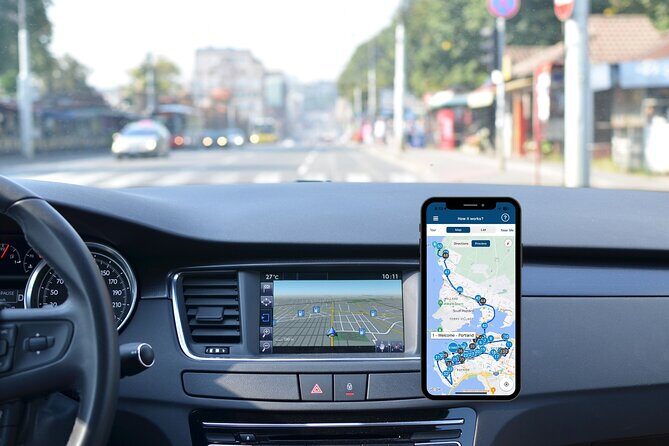
At $16.99 per group (up to 4), this is priced like you’d buy it once and share it inside a car. That matters because Portland can be expensive fast if you stack guided tours, parking, and paid entry.
You also get a package feel: offline maps, hands-free audio, and a route that’s already planned for you. If you’re comfortable driving in a city and you’d rather spend money on local food than on another ticket, this is usually a smart trade.
Getting started at Visit Portland Maine Information Center (Ocean Gateway Pier)
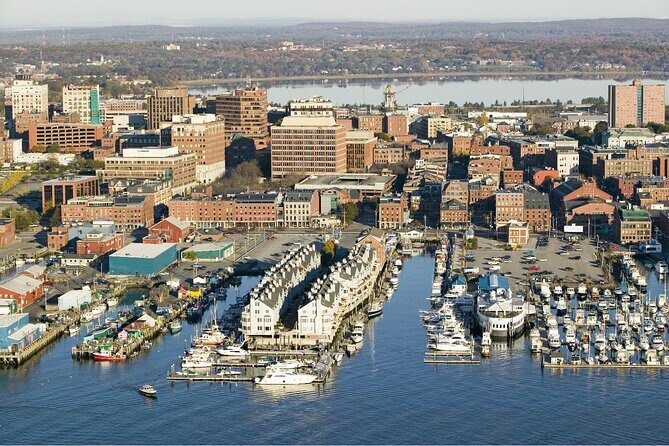
The tour starts where a lot of visitors already land: Visit Portland, Maine Information Center, 14 Ocean Gateway Pier. No guide meets you at the start, so you’ll be doing the “tap, drive, listen” rhythm from your own vehicle.
Plan on doing the setup right before you leave. After booking, you receive a password by email/text and you open Action’s Tour Guide App on-site. You’re told to download while you have strong wifi/cellular first; after that, the app is meant to run offline.
Quick practical tip: connect your phone to your car stereo using Bluetooth, USB, or AUX. Several reviewers praised how well navigation and audio worked, and car audio is the easiest way to keep the drive calm and safe.
West Street highlights: Maine Medical Center, Victoria Mansion, and Prohibition’s shadow
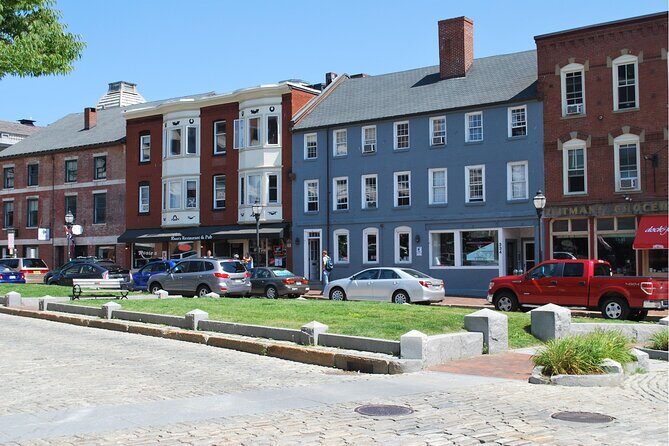
Stop timing throughout the route is built to be quick—often around five minutes per story point—so don’t expect long museum-style hangs. This first stretch is where Portland’s old money meets its real-world institutions.
Maine Medical Center and the Barbara Bush Children’s Wing
You begin with a modern landmark that holds a deep personal legacy: the Barbara Bush Children’s Wing at Maine Medical Center. The story connects Mrs. Bush’s life in Kennebunkport, Maine (about 30 miles south of Portland) and her major work raising funds for treatment of kids with serious illnesses. Her passing in 2018 is part of the remembrance.
This is a good opener because it sets a human tone right away, not just architecture trivia.
Other guided tours in Portland



Victoria Mansion: Ruggles Morse and Queen Victoria
Next comes Victoria Mansion, built by Ruggles Morse in 1858 as his summer home. He named it Victoria Mansion after Britain’s Queen Victoria, and the narration frames it as a standout example of Victorian art, architecture, and decoration.
If you’re the type who enjoys a single “wow” building, this one often delivers. The narration makes it easier to look with intention rather than just admiring from the curb.
Colorful servant rowhouses and why brick won out
Then you’ll pass the colorful brick rowhouses on the left. They were originally for Portland’s servant class and later became high-end condominiums.
The audio also ties materials to history: after big city fires, brick became the city-wide choice, so there’s less wood than you might expect in other American cities with similar eras.
Casco Bay harbor logic: deep water, tides, and winter freeze
Portland’s Portland Harbor (you’ll be near water as you drive) is described as a “deep water” port that generally does not freeze in winter. The explanation is clear and useful: the Gulf of Maine has strong tides, which mix the water and bring deeper, warmer water upward.
That’s the kind of detail that sticks because it helps you interpret what you see out the window, even on a cold day.
Neal Dow’s home and the father of American Prohibition
You’ll pass the home of Neal Dow. He was a former Portland mayor and is described as the father of American Prohibition. In 1851, Dow pushed through a statewide ban on the sale and consumption of intoxicating beverages—later used as a model for National Prohibition.
This is one of the more surprising “wait, Portland did that” moments on the route.
Arts District and Portland Art Museum up ahead
You’ll move through Portland’s Arts District, with independent galleries, working studios, coffee houses, and restaurants. On the right, Portland Art Museum comes up as a key landmark.
If you want a break, this is a reasonable area to park and wander a little—just know your tour rhythm is still designed for a quick drive through rather than a long downtown detour.
Brown Street to City Hall: Longfellow’s roots and Portland’s church-and-city spine
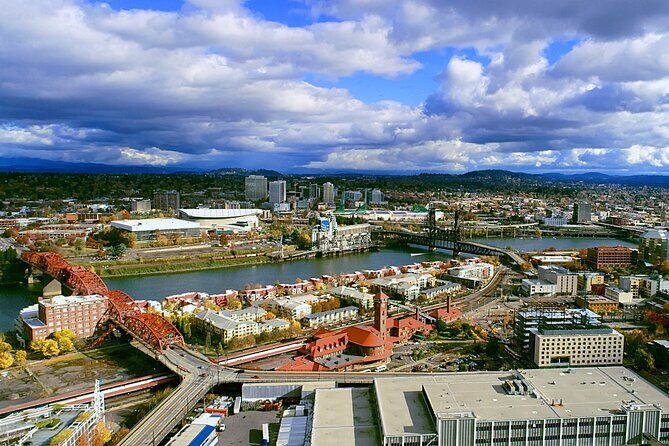
This middle zone tightens the focus on Portland’s cultural backbone—poets, churches, civic buildings, and the way the city repeatedly rebuilt after fire.
Wadsworth Longfellow House: Portland’s oldest brick house
On Brown Street, you’ll find Wadsworth Longfellow House, set back from the road. The audio explains that the poet grew up there.
It was built after the Revolutionary War by Peleg Wadsworth and described as the oldest brick house in Portland. That “oldest” line matters because it turns a nice-looking building into a timeline marker.
Oldest church: 1st Parish Unitarian Universalist Church
On Temple Street, you’ll pass the 1st Parish Unitarian Universalist Church, described as Portland’s oldest church. The narration also notes this is the second building that’s housed the congregation.
This stop is best for travelers who like their architecture connected to community history, not just style names.
Portland City Hall and the fire-rebuilt pattern
You’ll also pass Portland’s City Hall, described as beautiful for a small city. The audio mentions it’s the third City Hall building on this site, and the first two were destroyed by fire.
If you’ve noticed how often fire shapes American city history, this is where the narration puts that theme in your hands.
Franklin Tower, Eastern Cemetery, and the shipping-view rule of the 1800s
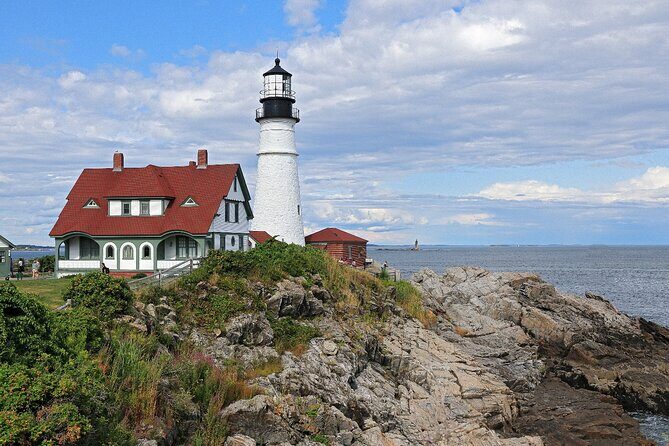
This section shifts from “what people built” to “how people moved,” with cemeteries and a clear maritime idea.
Franklin Tower: Maine’s tallest
On Franklin Street, the tall building on the left is Franklin Tower, built in the 1970s. The audio calls it the tallest building in Maine at 16 stories.
It’s a good contrast after the older brick buildings—proof that Portland keeps growing.
Eastern Cemetery: markers back to 1768
Then comes Portland’s Eastern Cemetery, described as the oldest cemetery in the city. Some headstones date to 1768, and the audio notes the oldest markers were wooden and were lost to fires.
This is a moment where slow looking pays off. Even from a drive-by, the narration gives you the timeline so you’re not just seeing a graveyard—you’re seeing an archive.
Spring Point Ledge and the “can’t be seen until…” rule
The tour then backtracks into the 1800s: ships entering Portland Harbor couldn’t be seen from the docks until they rounded Spring Point Ledge and were almost in the harbor.
This helps you understand why ports and approaches matter as much as the harbor itself. It’s also a neat mental trick for imagining the city before modern lighting and navigation.
Waterville to Munjoy: triple-deckers, the harbor edge, and a Portland promenade break

Now the route gets more “neighborhood Portland,” not just postcard Portland.
Waterville Street: flattop triple-deckers
On Waterville Street, you’ll notice examples of “flattop triple-decker” tenement housing, typical in New England. The audio dates them to the 1880s to the 1920s.
These buildings can look repetitive if you don’t know what you’re seeing. The narration gives you a category and a time range, which makes the streetscape easier to read.
Munjoy Street: Portland Harbor in Casco Bay
On Munjoy Street, you’ll get another look at Portland Harbor, part of Casco Bay on the southern coast of the Gulf of Maine. The city sits along its southern edge, and the port lies within the harbor system.
Eastern Promenade and East End Beach
The route points you toward the Eastern Promenade, described as a great space where Portlanders get out to enjoy weather and sea breezes. At the foot of the Eastern Prom is East End Beach.
This is the kind of moment where you might want to pause the car for a short walk. Even without a formal stop, the audio is doing a lot of the planning for you.
Walnut Street to Fort Williams Park: forts, bridges, Meetinghouse Hill, and military installations
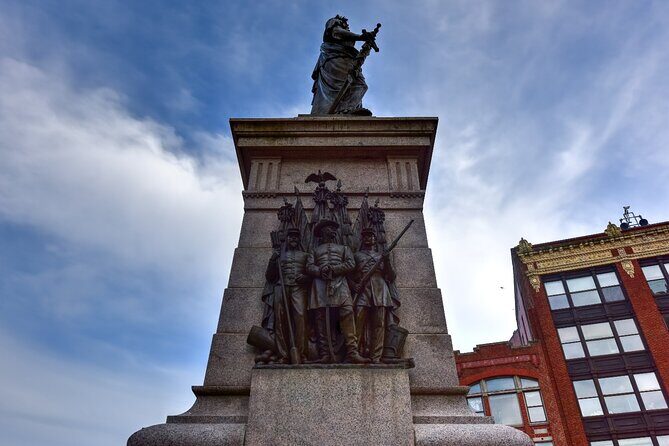
The final stretch turns toward the “why this geography matters” part of Portland travel.
Green space shaped by the British attack (1775)
On Walnut Street, the audio explains that after the British destroyed the city in 1775, Portland leaders decided to build a fort. The green space you see is linked to that decision.
It’s a reminder that Portland isn’t only a pretty harbor town. It’s also a strategic coastline with real defense choices.
Fore, Middle, and Back: street names tied to water
The tour also revisits something you might notice as you drive: Fore Street, Middle Street, and Back Street are named based on their proximity to the water.
This is one of those “you’ll see it instantly now” tips. Once you know the logic, the street grid feels less random.
Casco Bay Bridge: Portland to South Portland
You’ll head toward the Casco Bay Bridge, which crosses Casco Bay and connects Portland to South Portland.
It’s a practical way to understand how the city spreads across the bay edges.
Meetinghouse Hill: cemetery, Civil War statue, and a church behind
On Meetinghouse Hill, the narration describes a classic New England scene: cemetery on the left, a Civil War statue on the right, and a beautiful church behind the statue.
This stop is less about a single building and more about the “set” of the neighborhood—history framed in stone and greenery.
Fort Williams Park: military installations
Finally, you enter Fort Williams Park, where the audio says you’ll notice several military installations. This ending makes sense: you’ve been moving from governance and society to maritime approach and defense, and the route lands in the fort zone.
If you have time, this is a good area to slow down and look around a little before you wrap up your loop.
How the audio and GPS behave in real life (and how to avoid the common hiccups)
A big part of enjoying an audio driving tour is respecting what it needs to stay accurate. The tour guidance emphasizes that you should stick to the tour route and speed limit for best results.
Here’s what I’d watch for based on the issues people reported:
- Road closures / construction: one review noted a road closure that didn’t reroute the tour, and another had construction blocked roads. In practice, that means you may need to manually adjust how you rejoin the route.
- Audio cutting off: one reviewer said the audio cut off the last word or part of a word. The tour app itself mentions speed limits to prevent interruptions, so driving too fast is a likely culprit.
- Audio not lining up with visuals: a couple of reviews described confusion where left/right clues weren’t clear or the audio lagged behind what they were seeing. When that happens, the fix is simple—stop where you can, look for the next landmark, and let the audio catch up.
- GPS syncing: one review described missed items due to GPS not syncing. The practical move is to slow near intersections and give the phone a second to lock onto your position.
And the good news: many other reviews praised how accurate navigation and easy hands-free playback made the experience feel like a “next best thing” to a private guide, without waiting.
When this tour is best (and when you might want something else)
This driving GPS audio tour is ideal if:
- You’re visiting Portland with a car and want a tight, efficient loop.
- You like history tied directly to buildings and street patterns, not just generic facts.
- You want the freedom to pause for photos and snacks without coordinating with a group.
It may be less ideal if:
- You expect the system to re-route automatically around closures every time.
- You hate using an app while driving, even if audio is hands-free.
- You’re looking for long stops at a beach. The tour mentions East End Beach as part of the promenade area, but it’s still a driving-first itinerary.
One more note from a review that’s worth taking seriously: a local traveler found parts of the narration a bit outdated in terms of paint colors on houses. If you’re the type who notices visual details, expect some changes since the audio was created.
Should you book the Ultimate Portland Self-Guided Driving GPS Audio Tour?
Book it if you want a value-packed Portland intro you can do at your own pace, especially if you’re traveling with up to four people. The combination of offline GPS, location-triggered audio, and a route that hits major historic and civic sites makes it a strong first-day plan.
Skip (or at least go in with eyes open) if your trip includes heavy construction zones or you’re relying on perfect re-routing. Because it’s not a live guide, staying on-route and driving at normal speeds is the difference between a smooth story flow and a frustrating mismatch.
If you want a practical way to learn Portland fast—while still seeing real neighborhoods and not only the famous sights—this tour is a smart buy.
FAQ
How long is the Ultimate Portland self-guided driving GPS audio tour?
It typically takes about 1–2 hours to complete.
How far is the route?
The tour route is over 12 miles long.
Is the tour priced per person or per group?
It’s $16.99 per group (up to 4).
What language is the tour offered in?
The tour is offered in English.
Do I need cellular service during the drive?
You should download with strong wifi/cellular first. After that, the tour includes offline maps, and the app is meant to work without signal.
Does the audio play automatically as I drive?
Yes. The audio stories are hands-free and play on their own based on your location.
Where do I start the tour?
You start at Visit Portland, Maine Information Center, 14 Ocean Gateway Pier, Portland, ME 04101.
Does the tour include attraction tickets or entry fees?
No. It does not include attraction passes, entry tickets, or reservations.
Do I get access after the tour date?
Yes. You get new, lifetime access with no expiry, so you can use it any time on any trip.
You Might Also Enjoy

More Tours in Portland
- The Real Portland Tour: City and 3 Lighthouses Historical Tour with a Real Local
★ 5.0 · 1,448 reviews



More Tour Reviews in Portland
- The Real Portland Tour: City and 3 Lighthouses Historical Tour with a Real Local
★ 5.0 · 1,448 reviews