REVIEW · PORTLAND
Portland’s Ultimate 12 Historic Bridges’ Scenic Boat Tour
Book on Viator →Bookable on Viator
Portland’s bridges feel bigger from the water. This is a private Willamette River cruise that strings together Portland’s best bridge types with real-time, on-board narration. I love the river-level perspective—you see steel and concrete details that are easy to miss from land. I also love the up-to-6 group setup, because the captain and guide can shape the pace to your crew.
Expect a smooth, low-stress ride with an Oregon-registered tour guide and a USCG-licensed captain calling the shots. When it’s chilly, that matters: one past guide (Captain Nate) had heated seat blankets ready, and it made the whole outing feel more comfortable.
One consideration: the trip is short (about 2 hours), so many highlights are view-based from the boat rather than walk-around stops. Also, it’s BYOB and snacks aren’t listed as included, so plan accordingly if you get hungry.
In This Review
- Key takeaways before you book
- A private 2-hour bridge cruise that keeps Portland simple
- Price and value: what $395 really means for your group
- The river route: where the bridges and landmarks line up
- Ross Island to Tilikum: two very different kinds of bridge engineering
- Oaks Bottom Wildlife Refuge as your nature palate cleanser
- Ross Island Bridge: cantilever truss, Oregon rarity
- Tilikum Crossing: rail, buses, bikes, and feet
- Hawthorne, Steel, and Morrison: the lift-bridge cluster
- Hawthorne Bridge: vertical-lift and the oldest of its kind locally
- Steel Bridge: double-deck, two worlds of traffic
- Morrison Bridge: heavy use and historic placement
- Fremont, Broadway, Sellwood, and St. Johns: the long spans
- Fremont Bridge: tied-arch scale
- Broadway Bridge: Rall-type bascule
- Sellwood Bridge: new crossing with an older legacy
- St. Johns Bridge and Cathedral Park under it
- Portland sign, maritime relics, and river-city details
- The Portland Oregon sign from the water
- Oregon Maritime Museum Sternwheeler: river transport history
- The old working river feel: iron smelting and industrial edges
- From Elk Rock to Poets Beach to South Waterfront: modern Portland with a pulse
- Elk Rock: volcanic rock at the river’s edge
- Portland Poets Beach: a river connection built by volunteers
- South Waterfront and the Aerial Tram link to OHSU
- Parks, amusement nostalgia, and the river’s quiet stories
- Oaks Park: classic carousel energy
- Old Town and the Shanghai Tunnels story
- Pearl District: warehouses to modern Portland
- What it feels like on board: comfort, safety, and how to enjoy the ride
- BYOB means you plan the small stuff
- How to get the best photos
- Who this bridge tour is best for (and who should skip it)
- Should you book Portland’s Ultimate 12 Historic Bridges’ Scenic Boat Tour?
- FAQ
- How many people can be on the private boat?
- How long is the cruise?
- Is narration included?
- What should I bring since snacks aren’t listed as included?
- Where do we meet?
- Can I cancel for a full refund?
Key takeaways before you book
- Private group of up to 6 for $395 per group, so the cost per person drops fast if you fill the boat.
- USCG-licensed captain + Oregon-registered tour guide, plus narration and life jackets included.
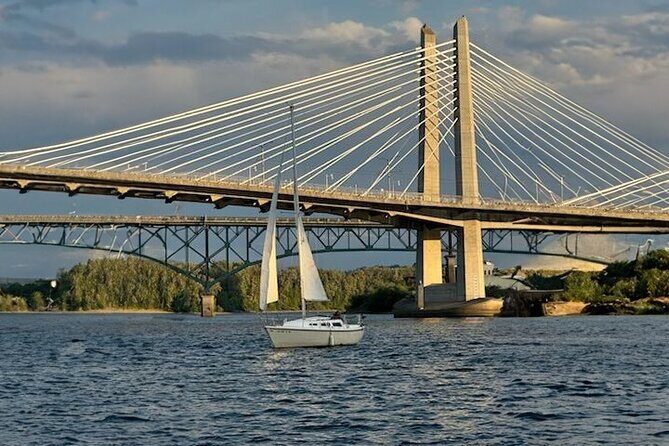
- Twelve bridges and more: you’ll pass landmark crossings like Tilikum Crossing, Hawthorne, Steel, Morrison, Fremont, Broadway, Sellwood, and St. Johns.
- Photo-friendly timing: you’ll be cruising at dusk-style times often, and the city lights make bridge and skyline views extra dramatic.
- Nature and river culture mix in (Oaks Bottom Wildlife Refuge, Poets Beach, Elk Rock, maritime history), so it’s not only steel and engineering.
- BYOB is allowed, so it’s a fun option for couples and small groups who want a little celebration vibe.
A private 2-hour bridge cruise that keeps Portland simple
This is one of those Portland experiences that’s easy to understand from the start: you meet, get on a private boat, and spend about two hours seeing Portland from the Willamette. The point isn’t rushing a checklist. It’s getting you close to the working river city—at an angle where bridges look like sculpture and the skyline reads like a story.
The tour’s strength is how it treats the bridges as part of Portland’s personality. You’re not only looking at structures; you’re also picking up design facts you can recognize on sight—like why some bridges lift, why others span with trusses, and why certain crossings became key city connectors.
And because it’s private (no mixing with strangers), you’re not stuck smiling through forced group chatter. If you’re traveling with kids, family, or a couple of friends, that private flow can be a big win.
Other boat tours in Portland

Price and value: what $395 really means for your group
The price is $395 per group for up to 6 people. That matters, because the value changes depending on how many seats you fill.
- If you book with 6 people, you’re roughly at about $66 per person.
- If you book as 2 or 3 people, you’ll feel the cost more because you’re spreading the group price across fewer seats.
So who gets the best deal? Small groups who can fill at least half the boat. If you’re in a party of 4–6, the math starts to look pretty reasonable for a private, guided, river-level experience with narration, insurance, and a USCG-licensed captain included.
The river route: where the bridges and landmarks line up
You’ll start near Willamette Park (6500 S Macadam Ave) and cruise along the river corridor where Portland’s famous crossings cluster. The tour is built around bridge views, but it also threads in riverside neighborhoods and nature spots, so you get breaks from the constant engineering focus.
From the water, you can read the city quickly:
- downtown skyline views as you move along the central river,
- bridge details that don’t fit into your phone’s snapshot from the sidewalk,
- and the way neighborhoods stack up around the waterline.
Also, the narration is part of the experience design. The guide isn’t just naming bridges; they’re explaining what you’re seeing and why it matters in Portland’s planning and transportation story.
Ross Island to Tilikum: two very different kinds of bridge engineering
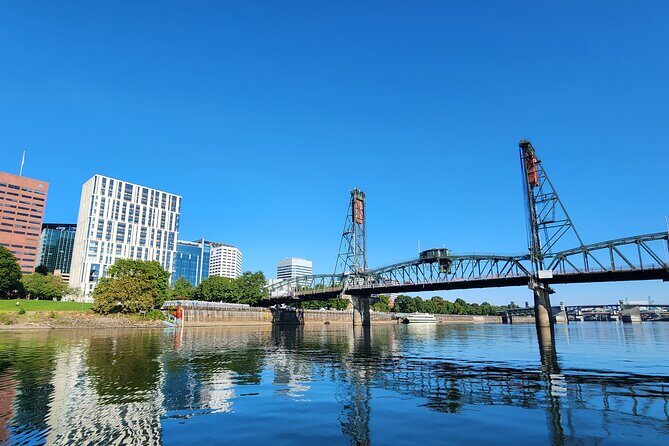
You’ll get an early feel for Portland’s river geography from the start, including a downtown skyline view from the Willamette River. Right away, it sets the tone: this is a Portland-at-sunset kind of cruise, where the city looks calmer and the bridges look more dominant.
Oaks Bottom Wildlife Refuge as your nature palate cleanser
One stop/spot highlights Oaks Bottom Wildlife Refuge, a 141-acre city refuge southeast of the river near Sellwood. This is Portland’s reminder that even with all the steel, the Willamette still has real wildlife habitat. It was Portland’s first wildlife refuge (established 1988) and became the city’s first migratory bird park (2004).
If you like bird-watching or you just want something green to look at between bridges, this section is a good reset.
Other historical tours in Portland
- The Real Portland Tour: City and 3 Lighthouses Historical Tour with a Real Local
★ 5.0 · 1,448 reviews


Ross Island Bridge: cantilever truss, Oregon rarity
Next up, you’ll see the Ross Island Bridge, which carries US Route 26 across the Willamette. It opened in 1926 and was designed by Gustav Lindenthal, and it’s named for its proximity to Ross Island. The tour’s framing also calls out something you can appreciate while you’re looking: it looks like a deck arch bridge, but it’s actually a cantilever deck truss bridge—and that kind of type is rare in Oregon.
That’s the sort of detail that makes a guided river cruise feel worth it. You start noticing structural cues instead of just admiring the overall shape.
Tilikum Crossing: rail, buses, bikes, and feet
Then comes the Tilikum Crossing, also called the Bridge of the People. It spans about 1,720 feet and is primarily designed for the MAX Orange Line light rail, while also serving pedestrians and bicyclists in a separate paralleling lane. It also carries TriMet buses and the Portland Streetcar, but not private motorized vehicles.
Opened in 2015, it became the longest bridge in the U.S. used for both public transportation and pedestrians, which is a big deal if you like seeing how cities use design to change who gets movement and space.
Hawthorne, Steel, and Morrison: the lift-bridge cluster
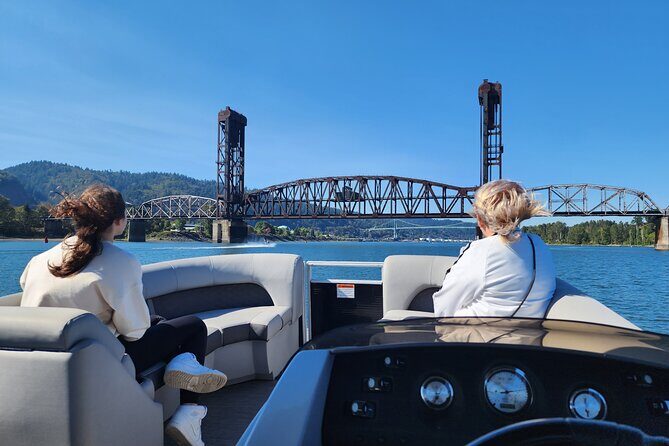
Portland has a knack for mixing old infrastructure with modern transit—and the next stretch makes that obvious.
Hawthorne Bridge: vertical-lift and the oldest of its kind locally
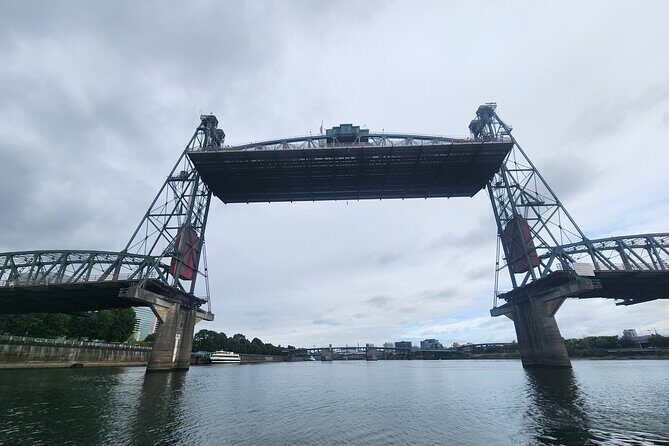
You’ll view the Hawthorne Bridge, a truss bridge with a vertical lift. It connects Hawthorne Boulevard and Madison Street and it’s the oldest vertical-lift bridge in operation in the United States, plus the oldest highway bridge in Portland.
From the boat, the lift mechanisms and tower geometry tend to read more clearly than they do from the street, especially in low light. Even if the lift isn’t operating during your cruise, you can still study the design.
Steel Bridge: double-deck, two worlds of traffic
Another highlight is the Steel Bridge, a through-truss, double-deck bridge with vertical lifts. It opened in 1912 and is one of the most multimodal bridges in the world in terms of what it carries: the lower deck handles rail plus bicycle and pedestrian traffic, while the upper deck carries road traffic and light rail.
The tour description emphasizes a rare detail: it’s the only double-deck bridge with independent lifts in the world. That’s the kind of engineering trivia you’ll actually be able to connect to what you’re seeing in real time.
Morrison Bridge: heavy use and historic placement
You’ll also pass the Morrison Bridge, a bascule bridge completed in 1958. It’s the third bridge at about the same site to carry that name and it was added to the National Register of Historic Places in November 2012. It’s one of Portland’s most heavily used bridges, so it helps you understand how today’s river traffic and old bridge design still work together.
Fremont, Broadway, Sellwood, and St. Johns: the long spans
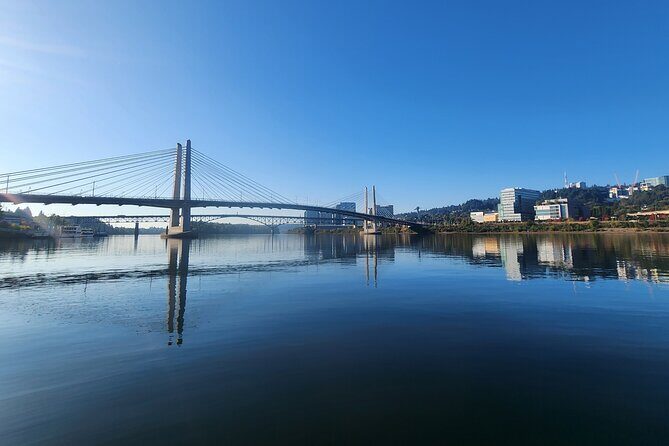
This part of the cruise leans into variety. Each bridge type has its own visual logic, and from the Willamette you can spot those differences fast.
Fremont Bridge: tied-arch scale
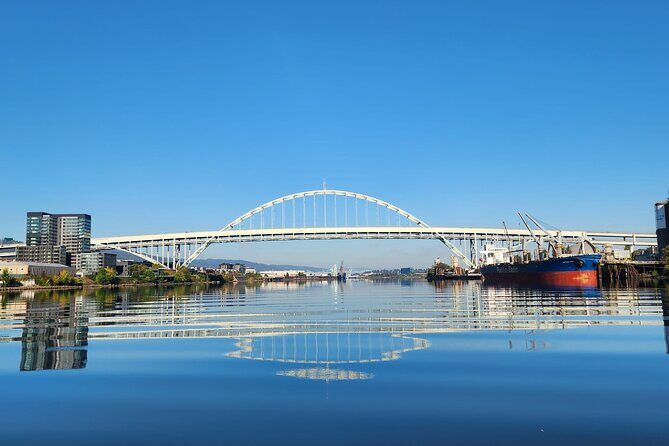
The Fremont Bridge carries I-405 and US 30. It’s a steel tied-arch bridge with the longest main span of any bridge in Oregon, and it’s also described as the second longest tied-arch bridge in the world.
That’s a fun one to watch from a moving boat. The scale comes through because the bridge’s span has a clean, legible rhythm.
Broadway Bridge: Rall-type bascule
You’ll also see the Broadway Bridge, built in 1913. It’s a Rall-type bascule bridge and it was Portland’s first bascule bridge. The tour notes it holds the distinction of being the longest span of its bascule design type in the world.
Even if you don’t memorize bridge classifications, the guided explanation helps you see that the moving sections and support system are built for a specific kind of navigation on the river.
Sellwood Bridge: new crossing with an older legacy
The Sellwood Bridge is a deck arch bridge. The current bridge opened in 2016 and replaced a 1925 span that carried the same name. The earlier bridge was Portland’s first fixed-span bridge and was the busiest two-lane bridge in Oregon because it was the only river crossing for miles in each direction.
You’ll also see the story of earlier river movement via the Sellwood Ferry Landing, a reminder that ferries used to be the link before modern bridges.
St. Johns Bridge and Cathedral Park under it
Finally, you’ll get to the St. Johns Bridge, a steel suspension bridge between Cathedral Park and the Linnton/Northwest Industrial neighborhoods. It carries US Route 30 Bypass and it’s the only suspension bridge in the Willamette Valley, plus one of three public highway suspension bridges in Oregon.
As you pass, you’ll look toward Cathedral Park, named for the bridge’s Gothic arches. The park’s history includes the 1949 murder of Thelma Taylor and later restoration efforts that transformed the area from a dumping ground into a community park. It even has an artistic installation called Drawing on the River by Donald Fels.
This is where the tour adds a human layer. Bridges aren’t only transport; they also shape places where people gather.
Portland sign, maritime relics, and river-city details
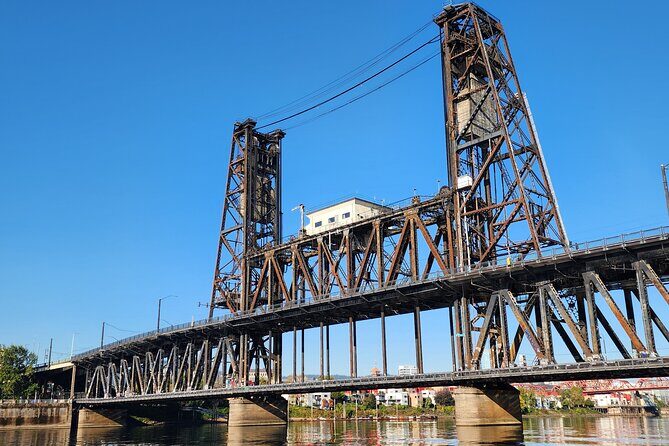
Bridge views are the headline, but the tour also slows down to point at Portland’s symbols.
The Portland Oregon sign from the water
You’ll spot the Portland Oregon sign from the river. It sits atop the historic White Stag Building near the Burnside Bridge. It was originally known as the White Satin Sugar sign, and after the city acquired it in 2010, it became a beloved Portland identity marker.
From the water, the sign becomes a focal point against the urban skyline, and the illuminated glow reflects on the river surface—especially nice during twilight or nighttime cruises.
Oregon Maritime Museum Sternwheeler: river transport history
Another memorable stop-by-view is the Oregon Maritime Museum Sternwheeler. It’s a historic vessel docked on the riverbank and used as a museum tied to Oregon’s maritime past. You’ll be able to see the classic paddlewheel design from the water and connect it to the idea that steam-powered river boats once mattered to trade and travel here.
The old working river feel: iron smelting and industrial edges
Portland’s industrial past shows up in the narrative too, especially around the site connected to the Oregon Iron Company. Established in 1865, it was the first iron smelting company west of the Rocky Mountains. The story includes setbacks, rebirths, and a production peak in 1890 before smelting ended in 1894, with the legacy continuing to influence the region (including Lake Oswego’s development).
From a boat, that history feels more real because you’re literally moving through the same river corridor that powered those industries.
From Elk Rock to Poets Beach to South Waterfront: modern Portland with a pulse
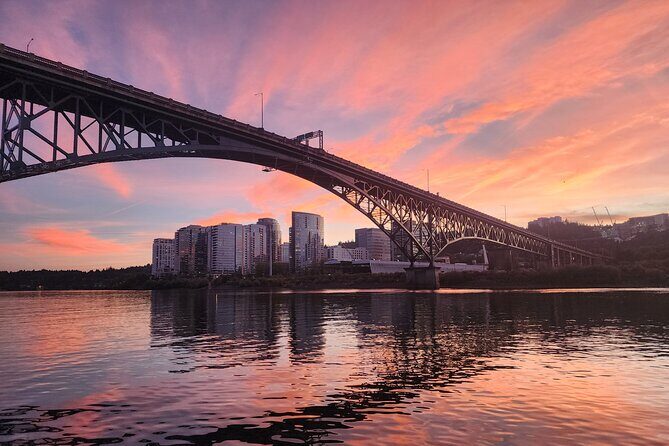
Not all views are steel structures. You’ll also get nature and modern development mixed in so the cruise doesn’t feel like a single-note photo mission.
Elk Rock: volcanic rock at the river’s edge
You’ll see Elk Rock and Elk Rock Island, with the tour framing Elk Rock as a former volcano. It’s a rugged, rocky feature rising from the river edge, with greenery on its slopes. It’s a quiet counterpoint to the bridges.
Portland Poets Beach: a river connection built by volunteers
Then there’s Portland Poets Beach, shaped by the Human Access Project (HAP). The description notes that it opened in the year 2000 but lacked signage and access until volunteers worked in 2014. Their effort included cutting through basalt rock and adding artistic elements such as poetry excerpts for kids and engravings featuring Chinook Jargon.
It even mentions a 2017 moment when Mayor Ted Wheeler took a swim there. After lifeguards were no longer in place, it kept its popularity as a resident spot to connect with the river.
South Waterfront and the Aerial Tram link to OHSU
You’ll also cruise past South Waterfront, described as a major urban redevelopment area built on former industrial brownfields. The area connects to downtown via Portland Streetcar and the MAX Orange Line, and the tour notes the Portland Aerial Tram as the link to OHSU on Marquam Hill.
If you like seeing how cities repurpose older industrial space into something used daily, this stretch gives you that “then and now” contrast.
Parks, amusement nostalgia, and the river’s quiet stories
Portland’s not only bridges and buildings. The cruise also points toward parks and places that make the Willamette feel human.
Oaks Park: classic carousel energy
Oaks Park is part of the sightseeing from the water. It’s been around since 1905 and is known for classic amusement rides, including a preserved wooden carousel with hand-carved horses. There are also vintage rides and a skating rink, plus seasonal events like summer concerts and holiday celebrations.
That kind of place is easy to miss from land when you’re focused on transit corridors, but from the river you get the setting—the greenery plus the waterline.
Old Town and the Shanghai Tunnels story
The tour also references Old Town Portland and the lore around the Shanghai Tunnels, subterranean passageways rumored to have been used for shanghaiing in the late 1800s and early 1900s.
You won’t be going underground on a boat cruise, but the mention makes the visible streets feel connected to a past you can research later.
Pearl District: warehouses to modern Portland
From the river, you’ll see the Pearl District as a contrast between Portland’s industrial past and its newer character. Historic warehouses with brick facades and big arched windows sit by the water, and from this angle you can see how the old riverfront storage space evolved into a neighborhood people actually live in and visit.
What it feels like on board: comfort, safety, and how to enjoy the ride
A few practical details help you enjoy the cruise more.
Life jackets are included, and the tour lists insurance for visitors. The captain is USCG licensed and there’s an Oregon registered tour guide. That combination usually means the tour is run like a real operation, not a casual sightseeing boat.
On comfort: the big winter variable is the wind off the water. Since one guide (Captain Nate) has provided heated seat blankets in chilly conditions, dress like you’ll need layers even if the day starts mild.
BYOB means you plan the small stuff
The tour is BYOB, and the info explicitly allows food and drinks and alcohol on board. What’s not listed is snacks included with the tour, so bring what you want to nibble on. If you forget, you’ll be stuck making do before the meeting point.
How to get the best photos
The tour includes photography opportunities, but the best photos still come down to your timing. I’d plan on shooting during bridge close-ups and when the skyline lights start to matter. If you have specific photos in mind (a certain bridge angle, the Portland sign glow, or a low-light bridge shot), tell the guide early so they can point out the best side of the boat when possible.
Who this bridge tour is best for (and who should skip it)
This tour is a strong fit if:
- you love bridges, engineering details, or transportation history,
- you want a private group experience without the hassle of moving between multiple stops,
- you enjoy mixing city views with brief nature moments like Oaks Bottom Wildlife Refuge and Elk Rock.
It might not be the right match if:
- you’re hoping for frequent walking stops and long time on foot,
- you’re traveling with a large group (the limit is 6 people),
- you hate BYOB-style outings and don’t want to plan your own snacks and drinks.
Should you book Portland’s Ultimate 12 Historic Bridges’ Scenic Boat Tour?
If you’re trying to experience Portland in a way that feels both scenic and practical, I think this is an excellent call. The private format keeps it relaxed, and the bridge-by-bridge approach makes the scenery more than just pretty—it gives you facts you can actually see and remember.
Book it if your group can fill enough seats to make the $395 price feel fair, and if you’re comfortable planning a BYOB setup. If your group wants a longer walking-style sightseeing day, you might be happier pairing a different land-based Portland day with this as a shorter, focused river moment.
FAQ
How many people can be on the private boat?
The tour is private and limited to a maximum of 6 people in your group, including children and adults, per state laws.
How long is the cruise?
The duration is about 2 hours.
Is narration included?
Yes. The tour includes narration by an Oregon registered tour guide, and you’ll also have photography opportunities.
What should I bring since snacks aren’t listed as included?
Bring your own snacks and drinks. The tour allows BYOB, and food and alcohol are allowed on board.
Where do we meet?
You meet at Willamette Park, 6500 S Macadam Ave, Portland, OR 97219, and the tour ends back at the same meeting point.
Can I cancel for a full refund?
Yes. You can cancel up to 24 hours in advance for a full refund. Canceling less than 24 hours before the start time isn’t refunded.
You Might Also Enjoy
More Boat Tours & Cruises in Portland
More Tours in Portland
- The Real Portland Tour: City and 3 Lighthouses Historical Tour with a Real Local
★ 5.0 · 1,448 reviews
More Tour Reviews in Portland
- The Real Portland Tour: City and 3 Lighthouses Historical Tour with a Real Local
★ 5.0 · 1,448 reviews