REVIEW · PORTLAND
Port City Lights Cruise
Book on Viator →Operated by Portland Discovery Land & Sea Tours · Bookable on Viator
A lighthouse cruise feels like a cheat code for first-time Portland. You get four classic lighthouses plus Fort Gorges in about an hour, with storytelling that ties the harbor to Civil War-era America.
I especially like that the narration stays practical and easy to follow, and that the boat setup makes it a smooth outing even when your schedule is tight. Josh and Steve show up in many of the best comments, along with captains who focus on comfort and safe, steady viewing.
Two things I really like: you can snack and sip onboard (with restrooms available), and the route is built around landmarks you’ll actually remember. You’re not just passing pretty scenery; you’re getting names, dates, and why these sites matter.
The one drawback to plan for is that this kind of harbor cruise depends on conditions. If weather turns rough, the experience can feel less perfect even when the crew keeps things moving.
In This Review
- Key highlights
- One Hour on Portland Harbor: What You Actually Get for $39
- Before You Board: Shoes, Weather, and Where to Sit
- How the Story Connects: Maritime Trade Meets Civil War Memory
- Stop 1: The 1897 West-Side Lighthouse at Portland’s Shipping Channel
- Stop 2: The 1855 Thomas Walter Lighthouse and Bug Light’s Corinthian Columns
- Stop 3: Maine’s Oldest Lighthouse, Commissioned by George Washington
- Stop 4: Fort Gorges on Hog Island Ledge (Fort Sumter Twin)
- Stop 5: The 1905 Casco Bay Lighthouse and Its Link to Graves Light
- Wildlife on the Water: Seals, Seabirds, and Being Flexible
- Onboard Comfort: Snacks, Restrooms, and the Crew’s Tone
- Guide-Worthiness: Turning Facts Into Something You Can Remember
- Who This Cruise Suits Best (and Who Might Want Something Else)
- Quick Value Check: Why $39 Can Feel Like a Win
- Should You Book the Port City Lights Cruise?
- FAQ
- Where does the cruise meet?
- How long is the Port City Lights Cruise?
- What will I see on the route?
- Are snacks, drinks, and restrooms available onboard?
- What should I wear or bring?
- What happens if the weather is bad?
Key highlights
- Four lighthouses in one outing plus Fort Gorges in about an hour
- Thomas Walter’s legacy linked to the U.S. Capitol design details
- Maine’s oldest lighthouse tied to a George Washington commission
- Civil War storytelling connected to Fort Sumter and later 20th-century use
- Wildlife chances like seals and seabirds, when the water cooperates
- Onboard comfort with snacks, drinks, and restrooms
One Hour on Portland Harbor: What You Actually Get for $39
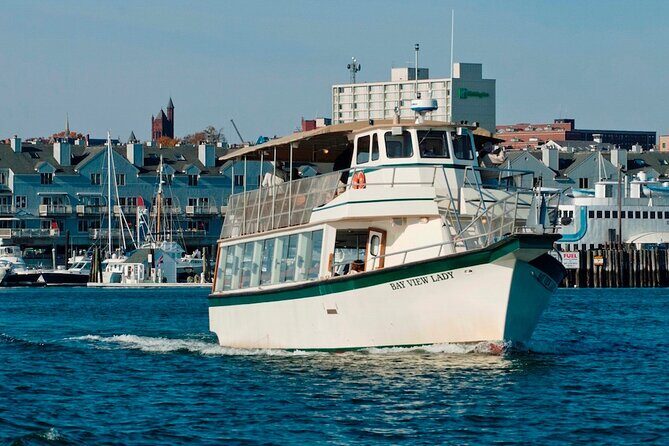
This is the kind of tour that works when you only have a slice of time. For $39 per person, you’re paying for a fast way to see major maritime landmarks without turning your day into a logistics puzzle.
In about an hour, you cover the west side of the shipping channel, swing out toward Casco Bay, and hit a Civil War-era fort setting. That makes it a strong value compared with longer cruises that can be hard to fit when you’re also trying other Portland basics.
It’s also a good match for different travel styles. Families get a manageable time on the water. Couples get a memorable route and views without a half-day commitment. If you like history but don’t want lectures, this format usually fits well.
More Casco Bay Boat Cruises in Portland
Before You Board: Shoes, Weather, and Where to Sit
Plan for a dock-to-harbor ride that can feel chilly, even in pleasant months. One of the most repeated practical notes is simple: bring a jacket, and don’t assume the wind will be mild once you’re out on the water.
Footwear matters more than people expect. Rubber-soled shoes are recommended, and high heels are not. You’ll be moving around a bit for the best angles, so grip helps.
Then there’s the seating trick that’s worth listening to. If you can, try to choose the right side of the boat for closer lighthouse views. Some seats are simply farther from the best sightlines, especially when the captain is matching angles to the route.
Finally, don’t ignore the weather requirement. Good conditions make a huge difference for comfort and wildlife spotting.
How the Story Connects: Maritime Trade Meets Civil War Memory
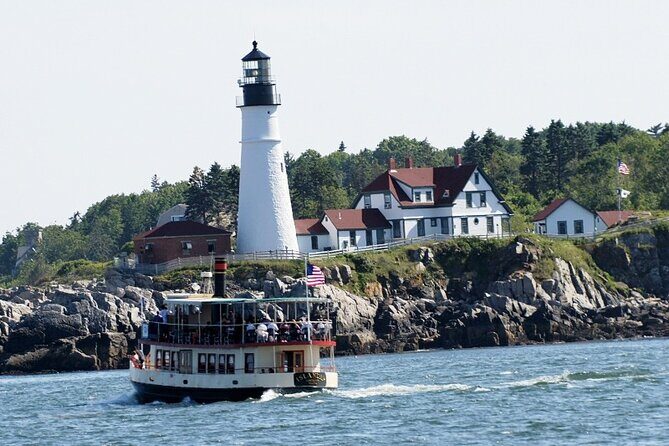
What makes this cruise more than a sightseeing loop is how the stops relate to each other. You’re watching the same coastline through different historical lenses: navigation and commerce first, then the military story layered on top.
The harbor isn’t just pretty. It’s a working waterway with shipping channels and entrance ledges that still shape how vessels move. The lighthouses you pass were built to solve real navigation problems, then later became part of the region’s identity.
Then the fort stop ties in a different kind of meaning. You’ll hear how a Civil War-era design echoed Fort Sumter in Charleston, and how the fort’s purpose changed over time—down the line into storage use in WWI and WWII. That blend is a big reason people rate this cruise so highly.
Stop 1: The 1897 West-Side Lighthouse at Portland’s Shipping Channel
Your cruise starts by focusing on navigation—specifically the west side of the Portland shipping channel. This lighthouse, constructed in 1897, is the kind of landmark that tells you the harbor has always been about safe passage.
From the water, you’ll get the lighthouse in context: where it sits relative to the channel and how it anchors the “this is where ships need help” story. It’s not just a photo stop. It’s a visual clue to how the harbor operates.
A small consideration: with a one-hour format, every minute counts. That means there’s less time to linger and take in every detail up close than on longer cruises. The payoff is momentum—good for short stays.
Stop 2: The 1855 Thomas Walter Lighthouse and Bug Light’s Corinthian Columns
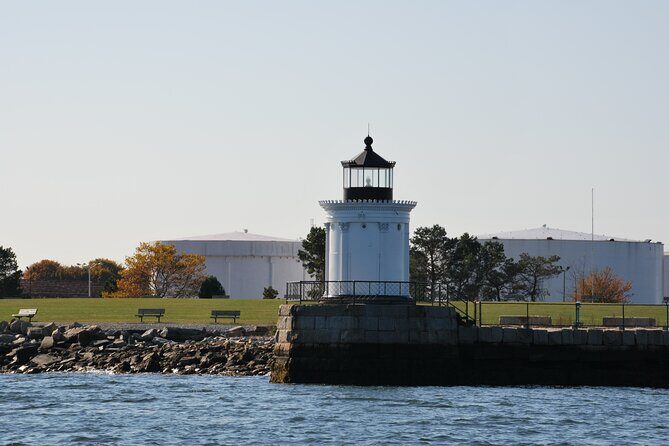
Next comes a lighthouse with a national connection. This one was built in 1855 and designed by Thomas Walter, the architect credited with the U.S. Capitol dome and the East and West wings.
That detail matters because it’s not random trivia. It’s your bridge between Portland’s coastal engineering and big-picture American architecture. It helps the lighthouse feel tied to the story of the country, not just local scenery.
You’ll also learn about the smaller companion known as Bug Light, with six Corinthian columns around its base. It’s an easy-to-spot feature from the water when the angle is right, and it turns the second stop into a moment with real visual payoff.
If you care about design details, this is the stop that tends to make people slow down mentally—even while the boat keeps moving.
Other boat tours in Portland
Stop 3: Maine’s Oldest Lighthouse, Commissioned by George Washington
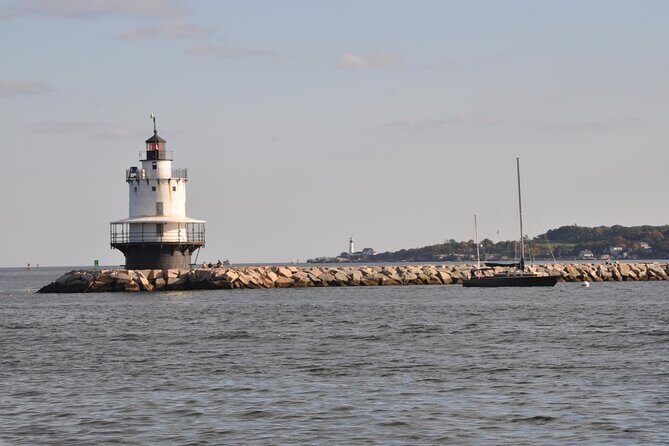
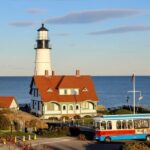
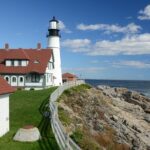
Then you hit the headline beacon: Maine’s oldest lighthouse, commissioned by George Washington. It’s also one of the most photographed lighthouses in the state, so you’ll recognize the shape even if you didn’t know the name yet.
From the cruise, this stop is all about the full silhouette and the way the lighthouse sits against open water and ledges. The framing from the harbor often makes it feel more dramatic than static photos do.
A practical note: if skies are flat and lighting is average, your pictures may look less “postcard.” Still, the lighthouse itself tends to photograph well because the forms are so clear.
This is also one of the better stops for people who want a quick history win. You get a major name—George Washington—plus the meaning of why lighthouses started as the core technology of safe coastal travel.
Stop 4: Fort Gorges on Hog Island Ledge (Fort Sumter Twin)
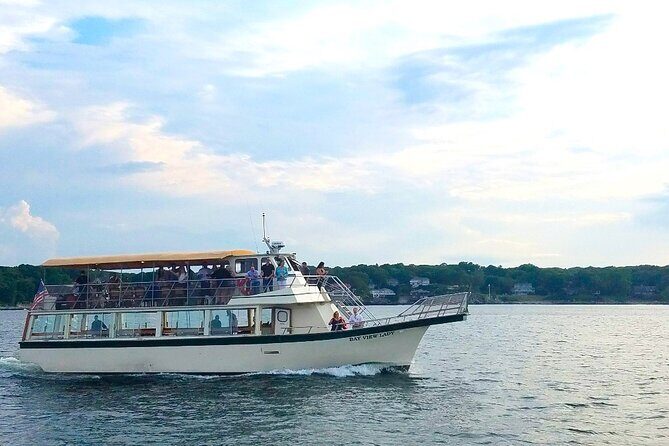
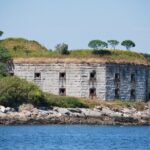
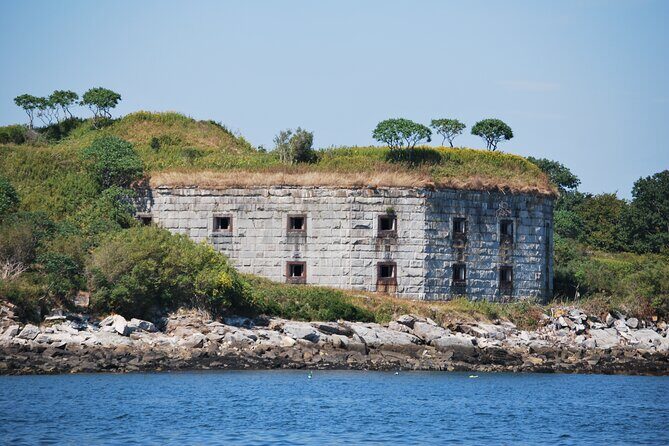
Now you switch from navigation to military history. The cruise includes a Civil War-era fort on Hog Island Ledge in Casco Bay: Fort Gorges.
Here’s what makes it especially interesting: it was modeled after Fort Sumter in Charleston, South Carolina. That connection gives you a “same idea, different place” comparison that’s easier to remember than a list of dates.
You’ll also hear how its role evolved. The fort was later used as a storage facility in WWI and WWII. That time jump helps you see the coastline as an asset people reused rather than a single-purpose relic.
From the boat, the fort has that strong “out where the action is” feel. If you’re into history, it’s a nice mental reset after the lighthouse focus.
Stop 5: The 1905 Casco Bay Lighthouse and Its Link to Graves Light
Your final lighthouse stop is a historic lighthouse constructed in 1905 on Casco Bay. It’s described as a twin of Graves Light off Boston, and it sits on a quarter-mile of ledge marking the northern entrance into Portland Harbor.
This stop is the one that helps you understand the “how ships actually enter and exit” side of the story. That ledge detail isn’t just geography—it explains why lighthouses had to be placed with precision.
From the water, you’ll likely appreciate the way the harbor entrance behaves like a funnel. The lighthouse gives you a fixed reference point so your brain can map the route while the boat carries you through.
If there’s heavy chop, keep expectations realistic for photos. The viewing should still be good, but you may want to focus on the overall scene rather than trying to capture perfect detail in every shot.
Wildlife on the Water: Seals, Seabirds, and Being Flexible
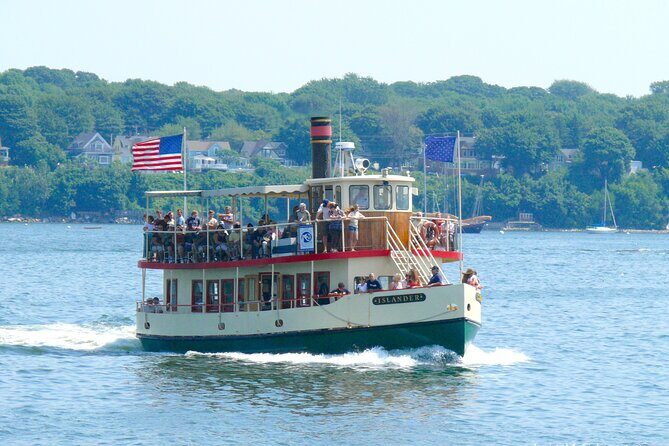
Wildlife is one of the cruise’s best “bonus” features. The route gives you chances to see things like seals and seabirds, and the timing can make a difference.
If the water is calm and conditions are right, you can often spot more than you expect for such a short itinerary. If conditions are rough, animals may move or hide from the noise and motion.
So I’d treat wildlife as a gift, not a guarantee. The core value stays the same: you’ll see major lighthouses and Fort Gorges on schedule when the weather cooperates.
Onboard Comfort: Snacks, Restrooms, and the Crew’s Tone
One of the reasons this tour is so repeatable is that it’s built for comfort. Snacks and drinks are available onboard, and there are restrooms, which makes a big difference on a one-hour outing. You spend less time planning and more time looking.
Crew service comes up a lot in the feedback: people describe a friendly, efficient vibe and a smooth ride. Captains such as Nate are noted for taking the ship safely and positioning it for views, even when the water gets a bit rocky.
Then there’s the narration style. Josh and Steve appear in many positive comments, often with praise for clear history and a touch of humor. That matters because one-hour tours can get choppy if the story doesn’t land fast. Here, the tone seems designed to keep you oriented while you’re moving.
Also, the group size is capped at 80 travelers. That’s large enough to run efficiently, but small enough that you’re not totally swallowed by crowds once you step inside.
Guide-Worthiness: Turning Facts Into Something You Can Remember
Here’s what I think the best guides do on this cruise: they connect the stop to a purpose you can feel. A lighthouse becomes “here’s how ships find the channel.” A fort becomes “here’s why this spot mattered in conflict.” And then it ties together so you don’t just collect images.
The best narration also points out what to look for while the boat is moving—so you’re not stuck guessing when the lighthouse appears at the edge of your view. You’re told what’s coming and why it’s there.
If you’re the type who likes history but gets impatient with rambling, this kind of structured tour is often a sweet spot. And if you just want fresh air and good scenery, the story keeps you engaged without stealing the views.
Who This Cruise Suits Best (and Who Might Want Something Else)
This is a strong choice if you:
- Have limited time in Portland
- Want big lighthouse payoff without a long day
- Prefer a tour with onboard comfort (snacks, drinks, restrooms)
- Travel as a family and need something manageable for kids
It also works well for couples doing a quick get-together. One-hour tours are great for pairing with lunch nearby right after you get back.
If you’re chasing an all-day wildlife safari vibe, you may feel a little let down. The schedule is built around landmarks first, wildlife second. You might see seals and seabirds, but the main event is the coastline’s human landmarks.
Quick Value Check: Why $39 Can Feel Like a Win
At $39, you’re paying for access to a route that would be hard to recreate yourself in a short time. Getting four lighthouses plus Fort Gorges from the water is the key value.
You also get onboard perks that reduce friction. Restrooms and snacks/drinks mean you don’t need a separate plan to stay comfortable.
And the timing is what turns it into a value play. Compared with longer cruises, this one helps you check a major box quickly, leaving your day open for other Portland sights. If your itinerary is packed, that flexibility has real worth.
Should You Book the Port City Lights Cruise?
If you want a fast, memorable water view of Portland’s most important coastal landmarks, I’d say book it. The format fits short stays, the onboard setup is practical, and the stops connect navigation with Civil War storytelling in a way that stays easy to follow.
Do book with one expectation in mind: it’s short, so it’s not built for hours of close-up wandering. It’s a highlight reel done well. If you’re okay with that trade for a big lighthouse payoff in about an hour, you’ll likely love it.
FAQ
Where does the cruise meet?
It meets at 170 Commercial St, Portland, ME 04101 and ends back at the same location.
How long is the Port City Lights Cruise?
The cruise runs for about 1 hour.
What will I see on the route?
You’ll see four Portland scenic lighthouses plus Fort Gorges, along with chances to spot wildlife like seals and seabirds.
Are snacks, drinks, and restrooms available onboard?
Yes. Snacks and drinks are available onboard, and restrooms are also onboard.
What should I wear or bring?
Wear rubber-soled shoes (high heels are not recommended). A jacket is a smart idea for wind and cool air on the water.
What happens if the weather is bad?
The experience requires good weather. If it’s canceled due to poor weather, you’ll be offered a different date or a full refund.
You Might Also Enjoy
More Boat Tours & Cruises in Portland

More Tour Reviews in Portland
- The Real Portland Tour: City and 3 Lighthouses Historical Tour with a Real Local
★ 5.0 · 1,448 reviews