REVIEW · PORTLAND
Portland Maine Self-Guided Driving & Walking Audio Tour Bundle
Book on Viator →Operated by Guide With Action · Bookable on Viator
Portland Maine has stories you can hear while you roll. This self-guided driving-and-walking audio tour bundle mixes city streets, ship-port history, and coastal viewpoints, with audio that starts as you reach each stop. One of my favorite parts is the hands-free, location-triggered playback, so you’re not constantly tapping through screens.
I also like that you get lifetime access and can do it at your pace, pausing for photos or snacks without a guide herding you along. The only real drawback to plan for: the app needs a proper start at the first story point and you should stick close to the route and speed the app expects, or the audio can stall mid-way.
In This Review
- Key things to know before you go
- How the Portland Maine driving-and-walking audio setup really works
- Price and value: what $24.99 gets you (and what it doesn’t)
- Downtown Portland audio stops: Victorian elegance, brick streets, and the poet’s home
- Commercial Street and Portland Harbor: the “why” behind the scenery
- Victoria Mansion: Victorian ambition in Portland
- The Danforth: where brick and class meet
- West Street and Maine Medical Center’s Barbara Bush Children’s Wing
- One Longfellow Square: the mayor who fueled Prohibition
- Arts District Garage and the Portland Art Museum area
- Brown Street and the Wadsworth-Longfellow House: oldest brick in Portland
- Old churches and classic civic buildings: Temple Street, City Hall, and Franklin Tower
- Cemeteries, triple-deckers, and the Portland Observatory: details you’ll miss without audio
- Eastern Cemetery: the earliest markers and lost wooden headstones
- Portland Observatory: when ships arrived unseen
- Waterville Street and the flattop triple-decker housing style
- Harbor viewpoints, Eastern Prom, and Fort Williams: the coastal portion that changes your mood
- Munjoy Street and Casco Bay: your postcard view, explained
- Eastern Promenade and East End Beach
- Walnut Street and the fort decision after 1775
- Fore Street: the water-named streets of Old Portland
- Casco Bay Bridge and Meetinghouse Hill: South Portland atmosphere
- Fort Williams Park: military installations and big-water views
- Old Port walking highlights: art, Longfellow, Monument Square, and the stubborn city spirit
- United States Custom House area
- Victoria Mansion, Longfellow sculpture, and the poet’s footprint
- Monument Square and Lincoln Park: symbols and recovery
- Tips to keep the audio flowing (especially if it starts glitching)
- Who this Portland Maine audio tour bundle is best for
- Should you book the Portland Maine driving-and-walking audio bundle?
- FAQ
- How long does the Portland Maine audio tour take?
- Is the tour usable offline?
- Do I need to buy tickets for attractions?
- Where do I start, and is there someone to meet me?
- Can I pause and resume whenever I want?
- Do I need headphones?
- How do I connect the audio for the car?
Key things to know before you go

- Offline-first audio: download while you have strong wifi/cellular, then use the tour without relying on signal.
- Driving + walking combo: you can see more Portland in a short window by mixing modes.
- No ticket stress: many listed stops are free to view from outside; attraction entry isn’t included.
- Harbor and tide details: you’ll learn why this port behaves differently in winter weather.
- Headphones help: walking is much easier with earbuds, especially outdoors with street noise.
How the Portland Maine driving-and-walking audio setup really works
This is a self-guided Portland Maine audio tour, meaning no person meets you at the start. Instead, you load the separate Action’s Tour Guide app, enter the password you receive by email/text, and then begin at the first story’s starting point. After that, audio plays on its own when your phone’s location matches the next cue.
You’ll do two styles of touring in one bundle. There’s a driving portion that hits downtown and along the harbor and into South Portland, and then a walking portion that focuses on classic Old Port areas and key monuments. The total experience is designed for about 3 to 5 hours, but the timing is flexible because you can pause and restart whenever you want.
If you want the audio in the car, the tour notes a few ways to connect your phone: Bluetooth, USB, or AUX. If you prefer walking audio, bring earbuds. The tour also mentions compatibility with Apple CarPlay, with Android Auto support coming, so you can keep your setup fairly painless if your tech cooperates.
One more practical note I’d treat as non-negotiable: you must download the tour while you have strong wifi/cellular. After that, it’s offline, but the initial download is the make-or-break step.
More Walking Tours & Audio Guides in Portland



Price and value: what $24.99 gets you (and what it doesn’t)

The bundle is priced at $24.99 per person, but it’s also marketed as a value model that you purchase per car, not per person. Either way, the key idea is that you’re not paying for a seat on a bus. If you’re traveling with a group in one vehicle, the per-person cost usually lands far below typical guided tours.
What makes it feel like good value is what’s included:
- A route with 30+ audio stories and clear stop-to-stop guidance
- Offline maps and audio that triggers by location
- Hands-free pacing: start anytime, pause when you want, skip what you don’t care about
What you don’t get is also important. Attraction passes, entry tickets, or reservations are not included. That means if you plan to go inside any museum or historic site, you’ll likely need separate admission. The tour does list many stops as free to view, but assume interior access is your call.
If your goal is to get oriented, learn what you’re seeing, and move through Portland efficiently without booking multiple guided activities, this bundle makes sense.
Downtown Portland audio stops: Victorian elegance, brick streets, and the poet’s home

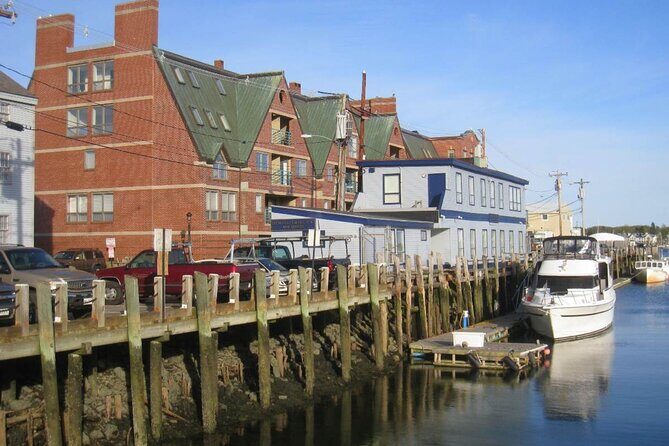
The tour starts with Commercial Street and Portland Harbor, and it sets a smart tone right away: this is not just sightseeing, it’s explanation. You’ll learn that Portland Harbor is a deep water port, so it generally doesn’t freeze over in winter. The Gulf of Maine has strong tides that mix the water column and bring warmer deeper water to the surface along the coast. It’s the kind of local detail that makes later harbor views click into place.
From there, you’ll move toward some of Portland’s best-known architecture and historic neighborhoods:
Commercial Street and Portland Harbor: the “why” behind the scenery
Plan to look out toward the harbor while the audio talks. Even if the weather is gray, the port history lands well because the tour connects natural forces (depth, tides, mixing) to what you see.
Victoria Mansion: Victorian ambition in Portland
You’ll pass the Victoria Mansion, built in the 1858 era by Ruggles Morse, as his summer home. The audio frames it as a major example of Victorian art, architecture, and decoration—and the story behind the name ties it to Britain’s Queen Victoria. This is one of those stops where the exterior alone gives you the full payoff, and it’s an easy photo moment.
More Portland Maine City Tours




The Danforth: where brick and class meet
Next up is The Danforth area and the colorful brick rowhouses. The audio points out that these were built originally for the servant class. Later, after major fire history pushed building patterns toward brick, the neighborhood became highly desirable—now showing up as expensive condos. It’s a simple story that explains why you see so much brick and not as much older wood framing.
West Street and Maine Medical Center’s Barbara Bush Children’s Wing
On West Street, you’ll connect a modern institution to real-world legacy. The tour highlights the Barbara Bush Children’s Wing at Maine Medical Center and explains that Mrs. Bush supported fundraising for treatment of kids with terrible illnesses, with her legacy remembered in that wing. This stop is less about architecture and more about meaning.
One Longfellow Square: the mayor who fueled Prohibition
Near One Longfellow Square, the tour passes the home of Neal Dow, a former Portland mayor credited as the father of American Prohibition. In 1851, the audio says he pushed a statewide prohibition banning the sale and consumption of intoxicating beverages. Even if you’re not a policy history person, it’s a great example of how Portland leaders shaped national culture.
Arts District Garage and the Portland Art Museum area
As you approach the Arts District, you’ll get a sense of how Portland balances “big institution” with independent creative life. The audio points out independent art galleries, working studios, coffee houses, and restaurants, with the Portland Art Museum ahead. Don’t plan on this being a hard-stop museum visit unless you want to add it—this portion is about spotting the neighborhood energy and using the tour to tell you what you’re looking at.
Brown Street and the Wadsworth-Longfellow House: oldest brick in Portland
On Brown Street, the audio identifies the Wadsworth Longfellow House, including details about its builder Peleg Wadsworth, a Revolutionary War general and Henry Longfellow’s grandfather. The tour notes it as the oldest brick house in Portland. This is a stop that pays off when you take a minute and actually look at the brickwork and placement set back from the road.
Old churches and classic civic buildings: Temple Street, City Hall, and Franklin Tower
You’ll also pass:
- 1st Parish Unitarian Universalist Church on Temple Street, described as the oldest church in Portland
- Portland City Hall, the third building on the site after earlier ones were destroyed by fire
- Franklin Tower, a 1970s building that the audio says is the tallest in Maine at 16 stories
In a city this old, these civic and religious anchors help you understand how Portland grew after disasters and why certain neighborhoods look the way they do.
Cemeteries, triple-deckers, and the Portland Observatory: details you’ll miss without audio

The middle of the driving loop leans into “street-level history,” which is exactly where an audio tour earns its keep.
Eastern Cemetery: the earliest markers and lost wooden headstones
You’ll hit Eastern Cemetery, called Portland’s oldest. Some headstones date back to 1768, and the audio explains that the oldest markers were wooden and lost to fires. It’s a reminder that what survives is often random—and that the city’s story includes losses, not just wins.
Portland Observatory: when ships arrived unseen
At Portland Observatory, you’ll go back to the 1800s: ships entering Portland Harbor couldn’t be seen from the docks until they rounded Spring Point Ledge. This is one of those “you had to be there” location stories. Even if you don’t spend a long time here, it helps you interpret the harbor approach.
Waterville Street and the flattop triple-decker housing style
On Waterville Street, the audio points out the flattop triple-decker tenement style typical of New England, built from the 1880s to the 1920s. This is useful context. Without it, those repeated facades can look like sameness. With it, you’re seeing a pattern tied to growth and housing needs.
Harbor viewpoints, Eastern Prom, and Fort Williams: the coastal portion that changes your mood
After downtown history, the tour shifts to views, breeze, and shoreline meaning.
Munjoy Street and Casco Bay: your postcard view, explained
At Munjoy Street, you’ll look over Portland Harbor, part of Casco Bay and the Gulf of Maine region. The audio also directs your attention to land across the water with oil tanks on the City of South Portland side. This is a good example of practical sightseeing: you’ll know what you’re seeing and why it matters to the working port.
Eastern Promenade and East End Beach
The Eastern Promenade Trail is described as a favorite for Portlanders, with sea breezes and the East End Beach nearby. Even if it’s cold, this is where you’ll feel the city’s waterfront attitude. Give yourself a couple minutes to look even if you’re not doing a long walk.
Walnut Street and the fort decision after 1775
On Walnut Street, the audio connects an open green space to a key moment: after the British destroyed the city in 1775, leaders decided they needed a fort. It’s a short story, but it helps explain why parks and protective planning show up in certain places.
Fore Street: the water-named streets of Old Portland
Then come the old street names—Fore St, Middle St, and Back St—tied to proximity to the water. It’s the kind of local logic that makes Portland feel less like a list and more like a place with a system.
Casco Bay Bridge and Meetinghouse Hill: South Portland atmosphere
The tour crosses through Casco Bay Bridge, connecting Portland and South Portland, then heads toward Meetinghouse Hill. The audio calls it a quintessential New England scene with cemetery space on the left, a Civil War statue on the right, and a church behind it. This is a good segment for slower driving or a careful pull-off if you’re comfortable—because the composition is already “photo ready.”
Fort Williams Park: military installations and big-water views
Finally, you enter Fort Williams Park, with several military installations. Even without stopping for a long visit, the audio’s framing makes the park feel tied to the harbor’s defense, not just scenery. If your day includes variable weather, this is a strong pick for staying interested anyway.
Old Port walking highlights: art, Longfellow, Monument Square, and the stubborn city spirit
After the driving loop, the walking portion focuses on Old Port essentials, covering classic Portland landmarks and key cultural stops. This walking part is designed for about 1 to 2 hours and is described as covering roughly 3+ miles.
United States Custom House area
The walking list begins with the United States Custom House, a logical anchor for an Old Port route. If you’ve done the driving portion first, you’ll recognize the story theme right away: trade, arrivals, and the harbor’s role in daily life.
Victoria Mansion, Longfellow sculpture, and the poet’s footprint
You’ll loop back past Victoria Mansion, then move toward a Henry Wadsworth Longfellow Sculpture. After that, the route includes the Portland Museum of Art, described as one of the oldest art institutions in the country, founded in 1882.
The walk also includes the Maine Historical Society and the Wadsworth-Longfellow House, with the audio mentioning Longfellow lived and wrote some of his most famous works here, including his first poem at age thirteen. That’s the kind of detail that makes a simple exterior stop feel personal.
Monument Square and Lincoln Park: symbols and recovery
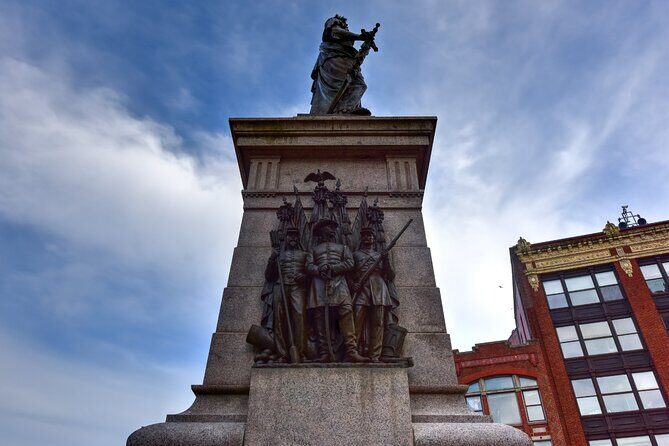
In Monument Square, you’ll find Our Lady of Victories, inspired by the Greek goddess of wisdom and war, Minerva. Then the walk covers Lincoln Park, with the story that it rose from the ashes of the Great Fire of 1866. Portland’s resilience is a thread that runs through the whole tour, and this is where you can feel it as place, not just dates.
Tips to keep the audio flowing (especially if it starts glitching)
This is mostly smooth, but audio tours live and die by your setup. Here’s what I’d do to avoid frustration:
- Start at the designated starting point. The tour is location-triggered, so starting late can shift everything.
- Follow the route and speed limit the app expects. If you shortcut, the next story might not pop on time.
- If you want car audio, connect before you begin. A flaky connection is when people tend to notice silence.
- Bring headphones/earbuds for the walking portion so you don’t fight street noise.
There’s also a practical support path: if you hit audio issues, you can contact the tour support team. And because the tour is new with lifetime access, you have the flexibility to repeat later if you want to catch anything you missed.
Who this Portland Maine audio tour bundle is best for
I think this fits best when you want control and context.
It’s great for:
- First-time Portland visitors who want a fast orientation across neighborhoods
- Families and groups in one car who want value without booking seats
- Travelers who like history but don’t want a lecture pace
- People who enjoy viewing from the street and parks, not sprinting to paid attractions
It may be less ideal if you:
- Want an escort who answers questions on the spot
- Expect the tour to handle bad phone battery or a weak GPS setup without your help
- Plan to ignore the route cues entirely and wander freely
Should you book the Portland Maine driving-and-walking audio bundle?
If your goal is to see a lot of Portland without committing to a scheduled guide, I’d book it. The mix of Victorian architecture, ship-port context, harbor viewpoints, and Fort Williams makes the route feel like more than a checklist. And the ability to run offline after download is a big deal in a city where signal can be unpredictable.
Before you buy, confirm you can do the one-time setup on good wifi/cellular. If you can, you’ll likely find the tour is simple to follow, easy to pause, and packed with details that make Portland’s streets and waterfront feel readable.
FAQ
How long does the Portland Maine audio tour take?
It’s designed for about 3 to 5 hours total. Each touring portion is about 2 to 3 hours, and the walking portion is described as 1 to 2 hours for the walking-friendly route.
Is the tour usable offline?
Yes. You need to download the tour while you have strong wifi/cellular. After that, the audio and offline maps are designed to work without cell service or Wi‑Fi.
Do I need to buy tickets for attractions?
Attraction passes and entry tickets are not included. Many stops are free to view, but if you want to go inside a specific museum or site, you’ll need to handle admission separately.
Where do I start, and is there someone to meet me?
It’s self-guided. You’ll get instructions by email/text with a password, then you start by going to the first story’s starting point. No one meets you at the start.
Can I pause and resume whenever I want?
Yes. The tour is designed for you to start, pause, and resume at your pace, including breaks for photos and snacks.
Do I need headphones?
Headphones are recommended for the best experience, especially for the walking portion. For driving, you can connect your phone to the car stereo using Bluetooth, USB, or AUX.
How do I connect the audio for the car?
The tour notes you can connect your phone to your car stereo system via Bluetooth, USB, or AUX. It also mentions compatibility with Apple CarPlay, with Android Auto support on the way.
You Might Also Enjoy




More Tour Reviews in Portland
- The Real Portland Tour: City and 3 Lighthouses Historical Tour with a Real Local
★ 5.0 · 1,448 reviews