REVIEW · PORTLAND
Portland City Tour: Views and News (Our Best Selling Tour!)
Book on Viator →Operated by Peak Tours and Transit · Bookable on Viator
Portland can feel like a maze on your first day. This 3-hour city loop helps you get your bearings fast, with big photo stops and guided stories that connect the neighborhoods. You’ll start at Pittock Mansion for sweeping views and end with more of the city’s layers than most self-guided walks in a day.
I especially like the mix of scenic stops and “here’s why this matters” commentary, from Eric to Damon and even Leo or Amber depending on who leads your group. It’s also a small group capped at 12, so the conversation doesn’t disappear the moment you ask a question. One consideration: a couple stops are marked possible based on weather and the guide’s plan, so it’s smart to dress for changing conditions and stay flexible.
In This Review
- Key highlights you should know
- Why this Portland loop works for first-timers (and return visitors)
- Getting started: meeting point, language, and what’s included
- Stop-by-stop: Pittock Mansion grounds and the quickest city view
- Washington Park on the way to International Rose Test Garden
- Old Town to the shopping districts: history you can place on a map
- Bridge spotting: Hawthorne Bridge and why it’s special
- Mount Tabor Park: views plus a dose of Portland’s past
- McMenamins Kennedy School: a 1915 school turned Portland weird
- Cathedral Park and St Johns Bridge: Lewis and Clark to steel suspension
- Price and value: is $89 worth it?
- Getting the most out of your guide (and why names keep popping up)
- Who should book this, and who might skip it
- Should you book this Portland city tour?
Key highlights you should know
- Pittock Mansion views: guided grounds time with serious skyline payoff
- International Rose Test Garden timing: 10,000+ roses in bloom, but still pretty out of season
- Neighborhood navigation: Old Town, shopping districts, Old Chinatown, and government-area context
- Iconic bridge details: Hawthorne Bridge and St Johns Bridge show up in the story
- Offbeat stops that feel Portland: McMenamins Kennedy School turns a 1915 school into a quirky hotel
- Small group pacing: short breaks on foot plus plenty of riding time
Why this Portland loop works for first-timers (and return visitors)
If you only have a little time, Portland’s size and variety can trip you up. This tour is built to solve that problem: you get city orientation, key landmarks, and the “how it all became this” version of the story in about three hours.
The biggest win is the structure. You’re not stuck on one theme. You’ll do view-focused stops in the morning-ish light, then slide into downtown districts where the guide explains the rough-and-tumble beginnings and what changed (and what didn’t). The result is that you can walk around later with more confidence, because you understand where you are and why the blocks look the way they do.
And yes, Portland has rules, but they’re usually friendlier than most places. This tour leans practical. The walking is short at each stop, and the route is designed so you’re not constantly hunting for parking or trying to translate bus lines on a tight schedule.
More Portland Oregon City Tours



Getting started: meeting point, language, and what’s included
You meet at Director Park, on the Park Avenue side, at 815 SW Park Avenue, Portland, OR 97205. The tour ends back at the same spot, which matters in Portland because you can lose track of time quickly once you start wandering.
Expect a mobile ticket and English-language guiding. You’ll also get bottled water, which is a small thing until you’re standing outside with a camera and the sun—or the mist—shows up.
Group size is capped at 12 travelers, and the format is set up for you to hear the guide while you ride. If you’re sensitive to sound or prefer a better seat, try to arrive a touch early and get to the vehicle quickly. (Some vehicles can be first-come for seating, so don’t wait until the last second.)
Stop-by-stop: Pittock Mansion grounds and the quickest city view
The first major payoff is Pittock Mansion. You’ll tour the grounds, hear the history, and get the kind of view that makes Portland feel like a real place on a map instead of a list of neighborhoods.
This is a smart opening stop because it sets your mental model. After you see the city from above, the rest of the route makes more sense: where downtown sits, how the hills and river area connect, and why certain neighborhoods developed where they did.
The stop is about 20 minutes, and admission at this point is listed as free. That’s one of the quiet value boosters on this tour: you’re not paying separate entrance fees just to see the “big postcard angle.”
What to keep in mind: if weather is iffy, high-view areas can change your photo plans quickly. A jacket and steady footing help, especially if the ground is damp.
Washington Park on the way to International Rose Test Garden

Between Pittock and the roses, you’ll get a guided ride through Washington Park, and the guide will highlight what’s there. The park isn’t just a pretty backdrop. It includes a zoo, forestry museum, arboretum, Japanese garden, amphitheatre, memorials, archery range, tennis courts, soccer field, picnic areas, playgrounds, and public art, plus wild forest and trails.
You don’t have time to do it all, but you’re getting the “big picture” of why Washington Park is such a magnet. It explains why locals treat this area like a backyard and why visitors keep circling back even after they’ve seen the downtown core.
Then comes the reason most people bring their camera: International Rose Test Garden. When roses are in bloom, you’re looking at 10,000+ roses. Even when it’s out of season, you still get a beautiful stop and a view that feels classic Portland.
This stop runs about 20 minutes and is also admission free. The best way to enjoy it is simple: take the first minute to orient yourself—where the viewpoint is, where the main paths lead—then slow down for photos and whatever details the guide points out.
One practical note: rose gardens can be chilly or breezy. If you’re sensitive to weather, you’ll appreciate that the timing is short and you’re not stuck walking for long stretches.
Old Town to the shopping districts: history you can place on a map
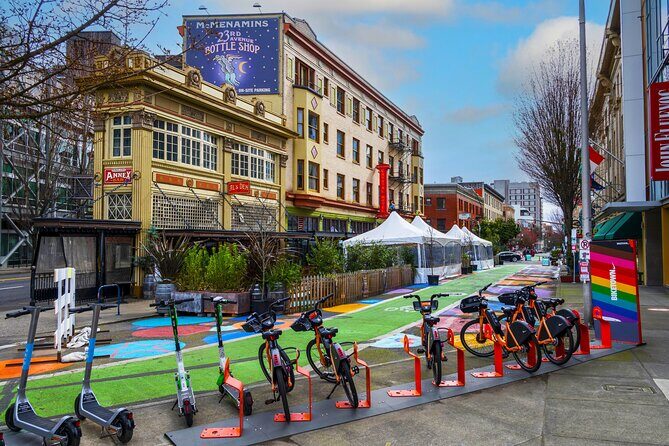
After the rose garden, the tour shifts into downtown context. You’ll pass through Old Town and hear stories about Portland’s early days—its rough-and-tumble beginnings—and how that history shaped today’s blocks.
Next you’ll go through areas tied to shopping and culture: the guide covers the city’s shopping district, Old Chinatown, the cultural district, and the government district. You’re not getting a museum lesson here. You’re getting location-based storytelling, which is what makes it useful when you later decide where to eat or where to wander next.
One highlight that Portland fans always want on a first trip is Powell’s Books, described on this tour as the largest bookstore in the world with around one million books. You’ll see it from the route as part of the drive-by highlights, and the guide frames it in the broader Portland story of bookstores, community, and keeping things weird in a good way.
You’ll also drive along a historic park segment where the guide explains the fascinating origin of the park. The exact park name isn’t locked in here, but the purpose is clear: help you connect today’s green space with the idea that Portland plans grew from decisions made long ago.
Other city tours we've reviewed in Portland




Bridge spotting: Hawthorne Bridge and why it’s special

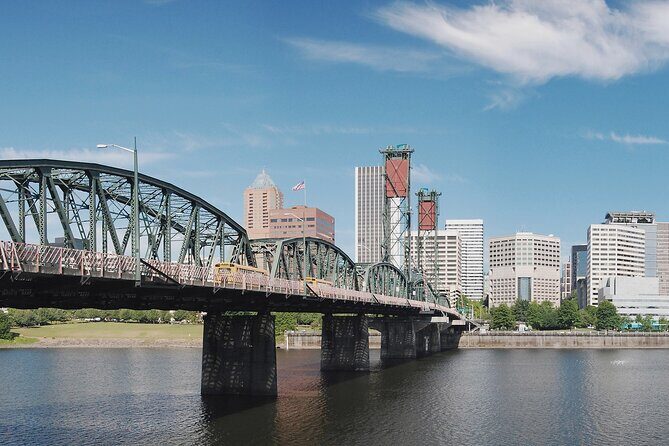
Bridges are Portland’s secret storytelling device. Depending on the guide and weather, you may get a stop at the Hawthorne Bridge. It’s described as a truss bridge with a vertical lift, and it’s the oldest vertical-lift bridge in operation in the United States.
Even if you’re not a bridge nerd, this is a useful stop because it gives you a concrete visual landmark for where the river energy hits the city. After you see it, you’ll recognize bridge shapes later when you’re walking around.
This is also a good example of the tour’s flexibility. Some bridge stops are possible, not guaranteed. That’s not a downside if you’re traveling with realistic expectations, but it helps to know that the plan is shaped by daylight, wind, and timing.
Mount Tabor Park: views plus a dose of Portland’s past
Another optional stop is Mount Tabor Park. The pitch here is simple: history plus an amazing view of the city.
Mount Tabor is valuable to include because it balances the earlier “downtown angle” with a different perspective. Instead of just staring at buildings, you see how the hills and neighborhoods stack up, and you start to understand why Portland feels spread out.
Like other stops, it’s about 20 minutes and is listed as admission free. If the weather cooperates, this is one of the easiest places to take a few minutes and just look.
What to watch: if it’s wet, the ground can be slick. Wear shoes that don’t punish you after you step out of the vehicle.
McMenamins Kennedy School: a 1915 school turned Portland weird

Then you might head to McMenamins Kennedy School, described as an offbeat hotel in a restored 1915 elementary school. The guide will share what makes it special, including the quirky, artisan-style interior vibe.
This stop is less about a single viewpoint and more about Portland’s “make it useful and make it yours” attitude. Turning a former school into a place to sleep and gather fits the city’s pattern: preserve the bones, add personality, keep it functional.
The stop time is about 20 minutes, and it’s listed as admission free on the tour. Expect a quick look around and guided context rather than a long sit-down experience.
Cathedral Park and St Johns Bridge: Lewis and Clark to steel suspension
The final stop is often Cathedral Park, named because of the dramatic bridge towering above. This is where the tour gets very specific.
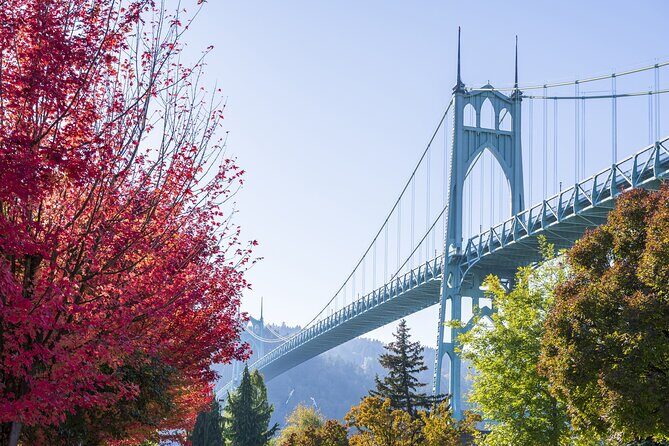
The area is believed to be one of the 14 Lewis and Clark landing sites in the Vancouver-Portland region. It also had a longer presence as a fishing and camping site for many local Native tribes, according to the tour’s description. You’ll also hear about the St Johns Bridge, built in 1931, with 400-foot towers and a 1,207-foot main span. The tour notes it’s the only steel suspension bridge in Portland.
The stop is about 15 minutes, and admission is listed as free. Even in a short time, the combination of bridge engineering plus the meeting-point history gives you a sense of place that feels more than postcard-level.
Practical tip: because this is a bridge-adjacent area, winds can change quickly. A layer helps.
Price and value: is $89 worth it?
At $89 per person for about three hours, the value depends on what you’re trying to solve.
If you’re figuring out where to go next, this tour can be a win. You’re paying for guided navigation and the “why” behind the route, not just for roadside sightseeing. You also get bottled water and a small group experience with a cap of 12.
The other value angle is the free admission notes at multiple stops like Pittock Mansion grounds, International Rose Test Garden, and other park-area viewpoints. Even if you’re not paying much at each stop, it adds up when you’re trying to build a day on your own with ticketed attractions.
Also consider the time math. A good Portland day can include travel time, lineup time, and decision fatigue. Here, the guide handles the sequence, and you get the orientation benefit without spending hours mapping it yourself.
Getting the most out of your guide (and why names keep popping up)
One of the most praised parts of this tour is the people behind the narration. Guides like Eric, Damon, Leo, and Amber show up in many accounts as the reason the tour feels fun and easy, not like a lecture. They also share practical ideas—especially restaurant suggestions and what to do based on your interests.
My advice is simple: treat this like a conversation, not a slideshow. If you want a food plan, ask during the downtown segments. If you care about views, ask before the optional stops like Mount Tabor or Hawthorne Bridge so you know what to expect when the weather changes.
You can also use the tour to decide what you’ll do after. When you see a district close up, you can later decide whether to return for an afternoon stroll or keep moving.
Who should book this, and who might skip it
This tour is a strong fit if you:
- want fast orientation on a first trip
- like short walks and mostly riding time
- want neighborhood context for where you might eat, shop, or wander
- prefer local storytelling over reading a guidebook afterward
You might skip it if you:
- want deep, stop-by-stop time in just one attraction (this is built for breadth)
- only travel on very strict schedules where weather-based changes are risky
- hate any walking at all (there are short breaks, even though the pace is generally light)
Should you book this Portland city tour?
If you’re trying to make the most of limited time, this is one of the clearer choices in Portland. You get big viewpoints, rose-garden scenery, and neighborhood history in a compact route, plus you’re not stuck paying for multiple entrance fees along the way.
Just book with realism: it requires good weather, and if it’s canceled due to poor conditions, you’ll be offered a different date or a full refund. The tour is non-refundable and can’t be changed after booking. If you’re hoping for a specific optional stop, bring a flexible mindset and plan to roll with the guide’s weather-based adjustments.
If you want a guided way to learn Portland’s map in a day, this $89 tour does the job.
You Might Also Enjoy

More Tours in Portland
- The Real Portland Tour: City and 3 Lighthouses Historical Tour with a Real Local
★ 5.0 · 1,448 reviews


More Tour Reviews in Portland
- The Real Portland Tour: City and 3 Lighthouses Historical Tour with a Real Local
★ 5.0 · 1,448 reviews