REVIEW · PORTLAND
Mount Hood Loop Scenic Drive Self Guided Audio Tour
Book on Viator →Operated by Drive with Action · Bookable on Viator
Your car becomes a smart guide.
This Mount Hood Loop Scenic Drive pairs a jaw-dropping 120-mile route with hands-free, location-triggered audio, so you get history and roadside stories as you roll. I also like that you’re not locked into a rigid group schedule; you can stop for photos, do short hikes, or just keep driving when the weather is doing its thing.
One thing to plan around: timing can feel fuzzy. The loop is advertised around 3 to 4 hours, but the full tour coverage is closer to 7 to 8 hours, depending on how many stories and trails you actually sample. Also, the audio starts only when you’re at the exact starting zone, so if you’re off by even a bit, the app may seem stuck until you find the right spot.
In This Review
- Key Highlights Worth Your Time
- What You’re Really Getting on the Mount Hood Loop Drive
- App Setup That Actually Matters (Offline, Audio, and Car Stereo)
- Timing Reality: 3–4 Hours or 7–8 Hours
- Stop-by-Stop: Mount Hood to the Gorge (What Each Stop Gives You)
- Stop 1: Mount Hood (Your “Why Am I Here” Moment)
- Stop 2: Corbett (Staying with the Good Road)
- Stop 3: Historic Columbia River Highway State Trail
- Stop 4: Vista House
- Stop 5: Multnomah Falls (The Main Character Waterfall)
- Stop 6: Eagle Creek Trail (Pick a Short Stroll or More)
- Stop 7: Latourell Falls (Easy Walk, Big Drop)
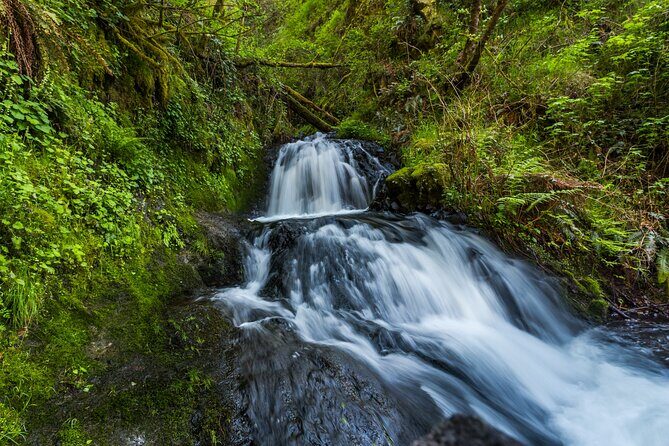
- Stop 8: Shepperd’s Dell Falls (A Quick Double-Decker)
- Stop 9: Bridal Veil Falls State Park (Moderate Effort, Worth It)
- Stop 10: Angel’s Rest (The Workout Option with City Views)
- Stop 11: Wahkeena Falls (Another Gorge Showstopper)
- Stop 12: Bonneville Dam (History + River Views)
- Side notes near the dam: Cascade Locks
- Stop 13: Bridge of the Gods (More Than a Photo Spot)
- Stop 14: Starvation Creek State Park (Short Trail, Several Cascades)
- Hood River and Mt Hood Details: Brewing Stops, Views, and Old Architecture
- Stop 15: Full Sail Brewing Company (Fruit Canning Factory to Beer)
- Stop 16: Cloud Cap Inn (Mt Hood’s Early Resort Era)
- Stop 17: Elk Meadows and the Timberline Trail Connection
- Stop 18: Timberline Lodge (Historic Landmark Architecture)
- Stop 19: Mirror Lake (A Glacier Cirque Scene)
- Stop 20: Silent Rock (Stories with No Guaranteed Proof)
- Final waterfall: Ramona Falls (A Tall Drop Over Volcanic Basalt)
- Practical Tips to Get the Best Day (Without Overplanning)
- Should You Book This Mount Hood Loop Self-Guided Audio Tour?
- FAQ
- How much does the Mount Hood Loop Scenic Drive audio tour cost?
- How long does the tour take?
- Does it work offline?
- Is parking or entry included for the stops?
- What do I need to do after booking?
- When does the audio start?
- Can I cancel for a refund?
Key Highlights Worth Your Time
- Offline maps and audio after you download, so low-signal moments don’t ruin the day.
- Audio that plays by location while you drive, which keeps the trip from feeling like you’re constantly tapping your phone.
- Waterfall-heavy stops in the Columbia River Gorge, including Multnomah, Wahkeena, Latourell, Bridal Veil, and more.
- Historic Oregon road moments like the Columbia River Highway-era viewpoints and Vista House.
- Real “choose your effort” hiking options, from quick walks to a serious climb at Angel’s Rest.
- Good group value: one purchase covers a car (up to four people), not per person.
What You’re Really Getting on the Mount Hood Loop Drive
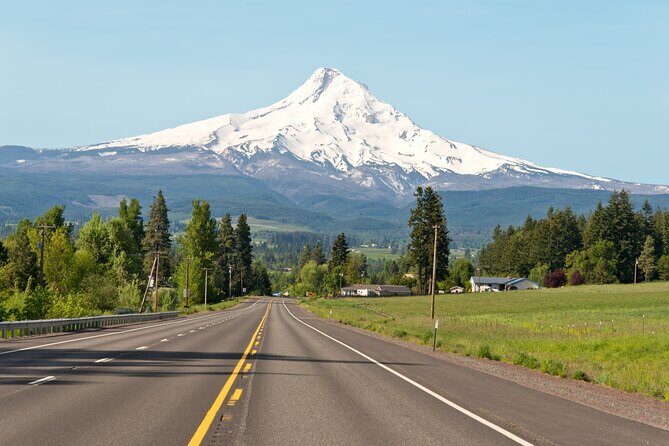
Think of this as a self-paced road trip with a story layer. You drive a scenic route around Mount Hood and through the Columbia River Gorge, while an audio guide takes you from viewpoint to viewpoint, explain-the-why moments included.
The “tour” isn’t just pretty pull-offs. It’s built around specific stops that make the area make sense: volcanic geology, gorge history, federal projects, and the names behind the trails. And because it’s offline-capable after setup, you can still follow along even when reception is spotty near canyons and waterfalls.
The big value is practical. One price for up to four people means it can be cheaper than doing a guided van or bus day trip, especially if your group would otherwise spend money on snacks, parking, and random stops anyway.
More Walking Tours & Audio Guides in Portland

App Setup That Actually Matters (Offline, Audio, and Car Stereo)
This tour is driven by an app called Action’s Tour Guide App. After booking, you’ll get an email and text with instructions and a password. You’ll need to download the tour while you have strong Wi‑Fi/cellular, then it works offline afterward.
When you arrive, nobody meets you at the start. You just open the app onsite, enter the password, and start the version that matches your planned direction and starting point. From there, the audio is designed to play automatically based on your location—so you’re not manually searching for the next stop.
For audio quality, the instructions suggest connecting your phone to your car stereo using Bluetooth, USB, or AUX. If you step out for walks, you might prefer using headphones, since the audio can get quieter when you’re not sitting in the seat and driving with the car sound system.
Timing Reality: 3–4 Hours or 7–8 Hours
Here’s the honest way to treat the day: plan it like a choose-your-own-adventure.
You’ll see the tour described as about 3 to 4 hours, which makes sense if you keep it mostly to driving and quick stopouts. But the full loop is over 120 miles with 60+ audio stories, and that’s closer to 7 to 8 hours if you do many stops and don’t skip most of the story beats.
A good strategy is to pick your priorities before you roll:
- Want maximum waterfalls? Build in time for the short walks around Multnomah, Latourell, Bridal Veil, and more.
- Want Mount Hood architecture and easy views? Focus on Timberline Lodge, Mirror Lake, and scenic overlook moments.
- Want a workout? Add Angel’s Rest and/or any longer trail options mentioned along the gorge.
You can also pause and restart whenever you want, since the tour supports stopping for breaks and photos.
Stop-by-Stop: Mount Hood to the Gorge (What Each Stop Gives You)
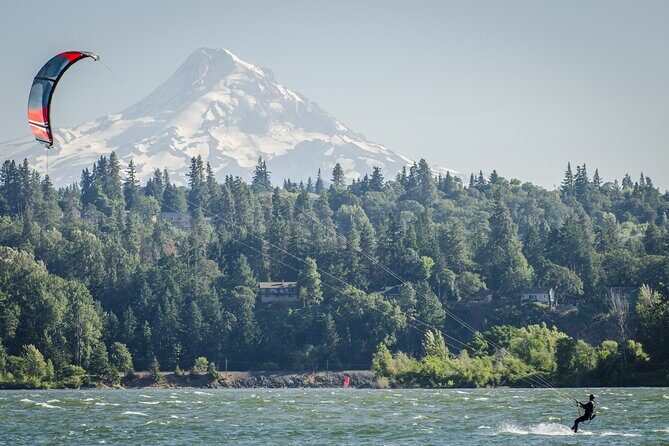
The itinerary is designed like a scenic relay: start with big mountain views, then gradually shift into gorge waterfalls and historic sites, then end back on the Mount Hood side.
Stop 1: Mount Hood (Your “Why Am I Here” Moment)
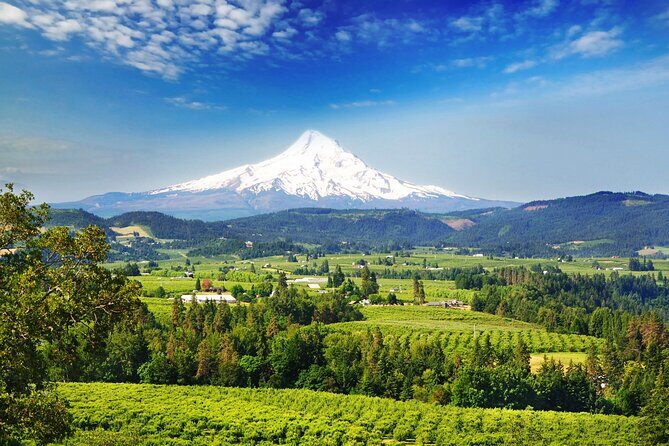
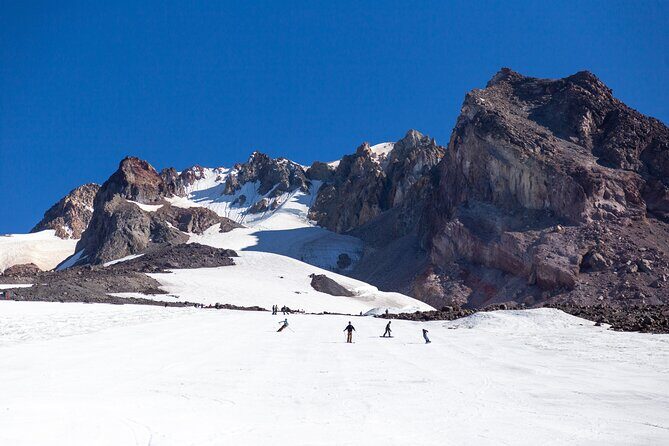
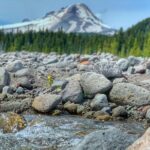
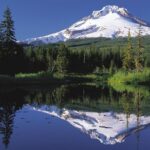
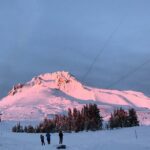
This opening section frames the whole trip. You’re driving around Oregon’s tallest peak, and the audio sets you up for what you’ll see later—valleys, trails, historic sites, and why the area’s geography feels so dramatic. If you’re coming into the day thinking you’ll just “look at mountains,” this start helps you start noticing details.
Consideration: if you hit Mount Hood early in the day, you may want to give yourself time to pull over when the views are best—this area rewards slow driving.
More Mt Hood Tours

Stop 2: Corbett (Staying with the Good Road)
Instead of sticking to the interstate line, the tour steers you onto the more attractive route along the gorge. That means better access to viewpoints and scenic stops, not just fast movement from A to B.
Stop 3: Historic Columbia River Highway State Trail
This stretch is tied to the era when road builders wanted drivers to experience the gorge. The audio here helps you see the highway as more than a road—between 1913 and 1922, it was designed to showcase gorge beauty. If you like roads with a story, you’ll enjoy this segment.
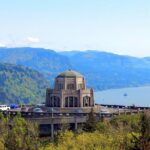
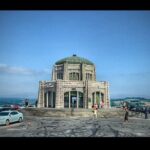
Stop 4: Vista House
Vista House is described as a crown jewel along the route, and it really functions that way: one big viewpoint plus a sense of arrival. Even if you only spend a short time here, it’s a high-value stop for orientation—everything else you do later feels more meaningful.
Stop 5: Multnomah Falls (The Main Character Waterfall)
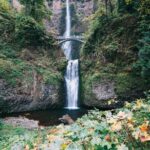
Multnomah Falls is presented as the second-tallest year-round waterfall in the U.S. and the Pacific Northwest’s most-visited natural recreation site. That’s big talk, but the stop is built to match it: you’re there to see the waterfall and also check out Multnomah Falls Lodge.
Practical note: if you’re short on time, you can still make this a quick stop. If you have more time, this is one of the places where walking around is worth it.
Stop 6: Eagle Creek Trail (Pick a Short Stroll or More)
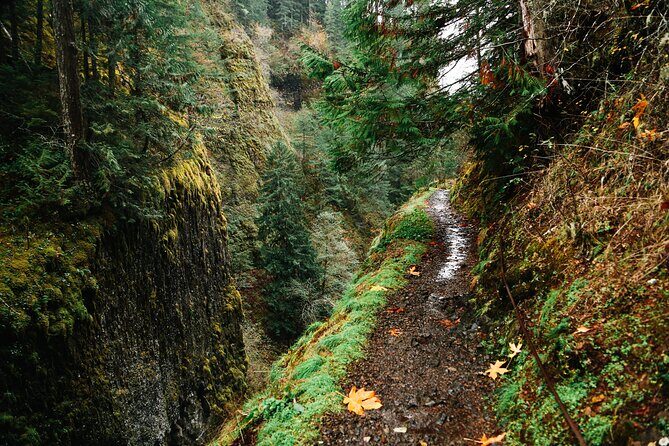
Eagle Creek is lush and gorge-like, following the creek through a slot-canyon feel with waterfalls along the way. The full trail is 23 miles, but the tour doesn’t push you into doing the whole thing. Use this as a “stretch your legs” moment rather than a commitment.
Stop 7: Latourell Falls (Easy Walk, Big Drop)
Latourell Falls is described as a doozy: a 224-foot cascade over columnar basalt. You don’t need long hiking for this one—there’s a short walk from the parking lot.
Stop 8: Shepperd’s Dell Falls (A Quick Double-Decker)
This is a short outing with a classic payoff. You’ll do about a tenth of a mile stroll by an old bridge built from 1914-era materials, and the waterfall is described as double-decker.
Stop 9: Bridal Veil Falls State Park (Moderate Effort, Worth It)
Bridal Veil Falls is two-tiered, dropping 120 feet over mossy rocks. Seeing it requires a moderate 2/3-mile hike, so this is where you decide if you want your day to lean more active.
Stop 10: Angel’s Rest (The Workout Option with City Views)
Angel’s Rest climbs about 1,500 feet over 2.4 miles to a bluff overlook. The audio frames the payoff clearly: views can include Beacon Rock, Silver Star Mountain, and Portland. This is not a casual stop, but if you want one real hike, this is a great candidate.
Stop 11: Wahkeena Falls (Another Gorge Showstopper)
Wahkeena Falls is labeled as an absolute showstopper, with a 242-foot drop through a narrow gorge. The stop is described as free and quick, which makes it a good add even if you’re managing time.
You’ll also get access info for nearby trail options like a five-waterfall loop and routes toward Ponytail Falls (about a 1-mile round trip). This is where the tour’s flexibility helps: you can choose one quick “bonus” hike rather than abandoning the whole plan.
Stop 12: Bonneville Dam (History + River Views)
Bonneville Dam was built as the first federal dam project on the Columbia River, tied to the New Deal era, and the audio points you toward the Bradford Island Visitor Center on an island in the river. There’s also an observation deck for gorge views.
If you like engineering history or just want a different kind of viewpoint beyond waterfalls, this is a smart pivot.
Side notes near the dam: Cascade Locks
The tour includes a suggested quick side trip to Cascade Locks, described as having a few attractions worth checking out. Use it as a break from constant waterfall focus.
Stop 13: Bridge of the Gods (More Than a Photo Spot)
Bridge of the Gods is described as officially part of the Pacific Crest Trail (PCT), the long-distance path from Mexico to Canada. That’s a fun connection if you’ve ever heard hikers talk about the PCT and want a tangible “this is real” moment.
Stop 14: Starvation Creek State Park (Short Trail, Several Cascades)
Starvation Creek is framed as moderate and short, with cascades appearing quickly—about a mile can bring you to multiple falls. The audio suggests walking a tenth of a mile east for a glimpse of Starvation Creek Falls.
You don’t need a long hike to enjoy it, which makes it a good “keep moving, still feel rewarded” stop.
Hood River and Mt Hood Details: Brewing Stops, Views, and Old Architecture
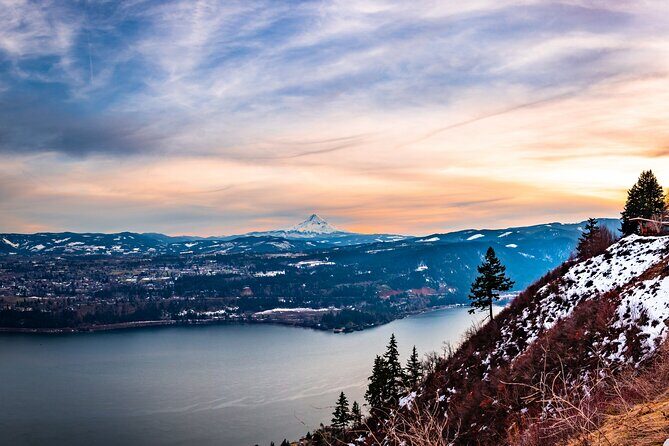
After the gorge waterfall run, the tour shifts to Hood River and then into Mount Hood country again. This stretch is where your day starts feeling like two trips in one: gorge wonders plus Mount Hood character.
Downtown Hood River is suggested for strolling, with boutique shops, art galleries, restaurants, wineries, and breweries. If weather is weird or you just need a reset, this is a natural place to slow down.
The tour also points out the History Museum of Hood River County, with exhibits ranging from Indigenous cultures of the gorge through settlers, loggers, and Japanese Americans. Even if you just peek through a few exhibits, it helps you understand why this area developed the way it did.
Stop 15: Full Sail Brewing Company (Fruit Canning Factory to Beer)
If you’re near that time of day, Full Sail Brewing is offered as a stop. The audio notes it opened in a former fruit canning factory back in 1987 and became one of the early microbreweries in Oregon. It’s a good “reward stop” after driving and hiking.
Stop 16: Cloud Cap Inn (Mt Hood’s Early Resort Era)
Cloud Cap Inn is described as the first permanent resort on Mount Hood, opening in 1889 at about 6,000 feet on the mountain’s northeast side. The audio calls out its stone-and-timber construction, fine dining, beds for 30 guests, and later even flush toilets. If you like old mountain infrastructure stories, you’ll enjoy the contrast between past comfort and today’s alpine scenery.
Stop 17: Elk Meadows and the Timberline Trail Connection
This section starts at Elk Meadows trailhead, goes up via Elk Meadows Trail, then connects to Newton Creek Trail and a section of the famous Timberline Trail. The practical value here is choice: you can tailor the effort based on your energy.
The tour also flags Devils Kitchen as dangerous in a specific way: it sits under popular mountaineering routes, and anyone who slips could end up in a fumarole. That’s the kind of safety detail that makes the audio feel more than just entertainment.
Stop 18: Timberline Lodge (Historic Landmark Architecture)
Timberline Lodge is described as a National Historic Landmark with stylized Cascadian architecture. It was finished in 1937, and it’s the kind of stop where you can get a strong photo and a short history explanation without needing to do a long hike.
Stop 19: Mirror Lake (A Glacier Cirque Scene)
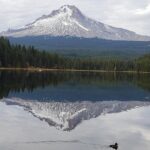
Mirror Lake gets a simple pitch: a gorgeous lake with a picture-perfect view of Mount Hood. The audio mentions glacial cirque geology—an amphitheater-shaped basin carved by glaciers—so it’s a good stop if you like your scenery paired with a “how it formed” explanation.
Stop 20: Silent Rock (Stories with No Guaranteed Proof)
Silent Rock comes with layered stories: an accident, curses, and older accounts tied to Native tribes. The tour doesn’t require you to believe every version, but it gives you something to look for when you stop—like the way local places collect meaning over time.
Final waterfall: Ramona Falls (A Tall Drop Over Volcanic Basalt)
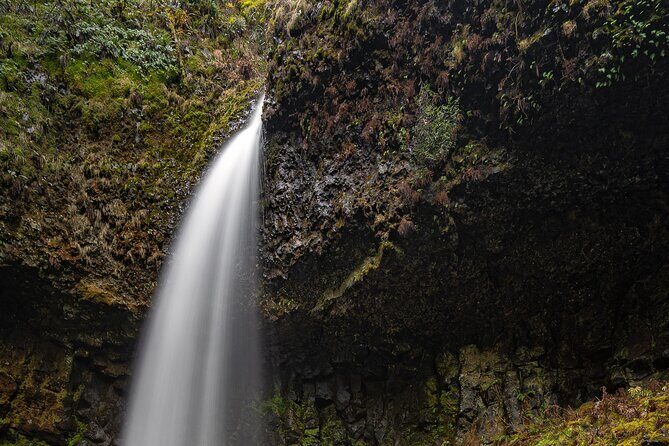
The last standout in the provided sequence is Ramona Falls, described as a 120-foot waterfall flowing over a black cliff of volcanic columnar basalt. It’s a strong closer if you still have energy after the lodge and lakes.
Practical Tips to Get the Best Day (Without Overplanning)
Here’s how to make this self-guided drive feel effortless instead of stressful.
- Download the tour while you’re in good coverage. If you wait until you’re already out of signal, you’re gambling with setup.
- Expect the route to offer more than you can do. The tour gives you options like short waterfall walks and bigger climbs; pick what matches your group’s energy.
- Treat some stops as “quick hits.” Latourell and Shepperd’s Dell are described as easy from parking, while Bridal Veil and Angel’s Rest need more time and effort.
- Don’t ignore route changes and road closures. The app has an updated approach for closed roads (based on real-world experience using the tour), so trust it over shortcuts you might be tempted to make.
- Plan for a car-audio setup. If you’ll be hiking while listening, consider headphones so the audio doesn’t compete with trail noise.
Should You Book This Mount Hood Loop Self-Guided Audio Tour?
I’d book it if you want a value-packed drive that balances big views with real context—and you like doing things at your own speed. The offline audio and hands-free approach are especially attractive if you hate fussing with apps while driving.
Skip it if you want a tightly scripted guided experience where someone manages your timing and logistics end to end. This is self-guided, and the audio starts only when you’re at the correct start zone, so you need a little patience at the beginning.
If you’re traveling with up to four people and you’re okay with optional hikes—short, moderate, and one serious climb—this tour is a strong way to turn a scenic drive into something that feels like it has a purpose.
FAQ
How much does the Mount Hood Loop Scenic Drive audio tour cost?
It costs $16.99 per group, up to 4 people.
How long does the tour take?
It’s listed as about 3 to 4 hours, though completing the full set of audio coverage is described as closer to 7 to 8 hours.
Does it work offline?
Yes. You must download the tour while you have strong Wi‑Fi/cellular, and it works offline after that.
Is parking or entry included for the stops?
At least some stops are marked as not included, so attraction passes and entry tickets are not included.
What do I need to do after booking?
You’ll receive instructions by email and text with a password. Download the Action’s Tour Guide App, enter the password, and start the correct tour version from the onsite starting point.
When does the audio start?
You start at the first story’s point in the app, and the audio plays automatically as you follow the tour route to the next story location.
Can I cancel for a refund?
Yes. You can cancel up to 24 hours in advance for a full refund.
You Might Also Enjoy

More Tour Reviews in Portland
- The Real Portland Tour: City and 3 Lighthouses Historical Tour with a Real Local
★ 5.0 · 1,448 reviews