REVIEW · PORTLAND
Maine Whale Watching Tour in Portland
Book on Viator →Operated by Maine Coast Cruising · Bookable on Viator
A whale watch is mostly waiting… until it isn’t. This one stands out because you get two quick lighthouse stops before you head out for two hours offshore, plus a small-group vibe (max 14). You’re close to the action, and the day moves at a brisk, fun pace.
I especially like the mix: first, the classic Maine coastline views at Portland Head Light and then the stark Casco Bay drama at Halfway Rock. Second, the people running the trip focus on marine life in a way that makes the time feel useful even when sightings are slow—think naturalist-style explanations and real talk about what’s happening out there.
One thing to consider: whale sightings are never guaranteed, and the boat ride can be intense. If you’re prone to motion sickness or you hate cold, windy spray, this format may be a tough fit.
In This Review
- Key Highlights You’ll Notice Right Away
- From Marina Wy to Casco Bay: The 3.5-Hour Rhythm
- Portland Head Light: A 5-Minute Classic Worth the Detour
- Halfway Rock Lighthouse: Windy Casco Bay in One Look
- The Whale-Watching Stretch: Two Hours Offshore (No Guarantees, Still a Good Bet)
- The Boat Ride Reality: Speed, Spray, and Motion-Sickness Math
- Crew Style and Naturalist Talk: How You Get More Out of 2 Hours
- Weather Decisions: Why Cancellations Happen (and Why That’s Not a Bad Sign)
- Value: What You Get for a Whale Watch That’s Actually Close to the Water
- Who Should Book This Whale Watching Tour?
- Should You Book Maine Coast Cruising in Portland?
- FAQ
- Where does the tour start in Portland?
- How long is the whale watching tour?
- What are the main stops during the trip?
- Is the tour language English?
- Do I need to bring a ticket?
- Is whale watching guaranteed?
- What should I wear for the boat portion?
- Will the tour run in rough weather?
- What’s the group size limit?
Key Highlights You’ll Notice Right Away
- Two lighthouse stops with quick photo time: Portland Head Light and Halfway Rock
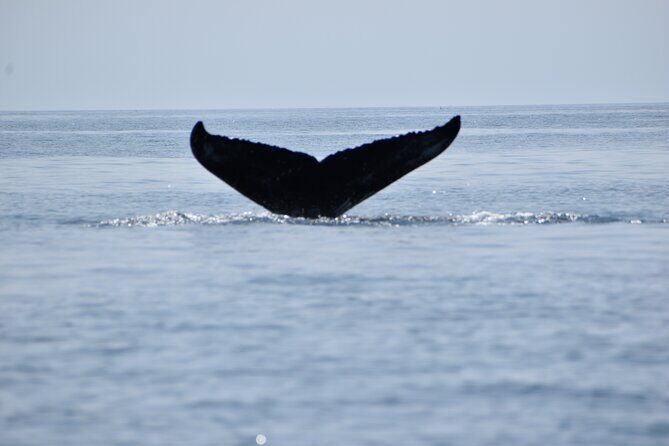
- 2 hours of whale watching offshore, not just a short loop
- Small group size (maximum 14) that helps the experience feel less crowded
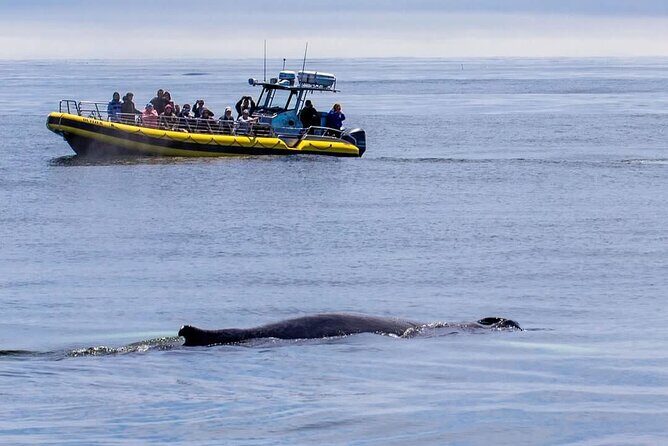
- High-speed RIB/Zodiac-style boat for a closer-to-the-water ride
- Marine-life interpretation from the crew, including naturalists on some departures
- Real safety-based cancellations when seas get too rough
From Marina Wy to Casco Bay: The 3.5-Hour Rhythm
This trip is built around a simple flow: meet in Portland, hit two iconic lighthouse spots on the way out, then spend the bulk of the time looking for whales.
The total duration runs about 3 hours 30 minutes including travel time. That matters because it tells you what to expect on your schedule. You’re not just buying a “2-hour experience.” You’re buying a whole half-day plan that moves from shoreline landmarks to open water and back again.
You’ll also want to show up ready to go. The meeting point is 1 Marina Wy, Portland, ME 04101. The tour is in English and uses a mobile ticket, which is handy if you’re traveling light.
Finally, the physical side is moderate. You don’t need to be an athlete, but you should be comfortable stepping around and spending time outdoors in coastal weather.
More Lobster & Seafood Tours in Portland


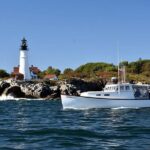
Portland Head Light: A 5-Minute Classic Worth the Detour
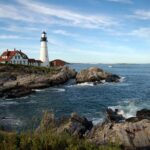
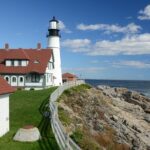
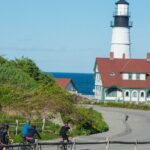
The first stop is Portland Head Light, in Cape Elizabeth. This light station sits right where the entrance to the main shipping channel meets Portland Harbor within Casco Bay. It’s completed in 1791, which makes it the oldest lighthouse in Maine.
This is a quick stop—about 5 minutes—and you’re not there for a museum crawl. You’re there to catch the coastline from the right angle before you switch from land views to open-water scanning.
Why I like this kind of stop: it gives you instant Maine atmosphere. Even before you see a single whale, you get a real sense of where you are—working harbor, cold Atlantic water, and that “ship channel” feel. Also, it sets a nice tempo for the day: calm land moment, then you accelerate to Casco Bay.
Halfway Rock Lighthouse: Windy Casco Bay in One Look
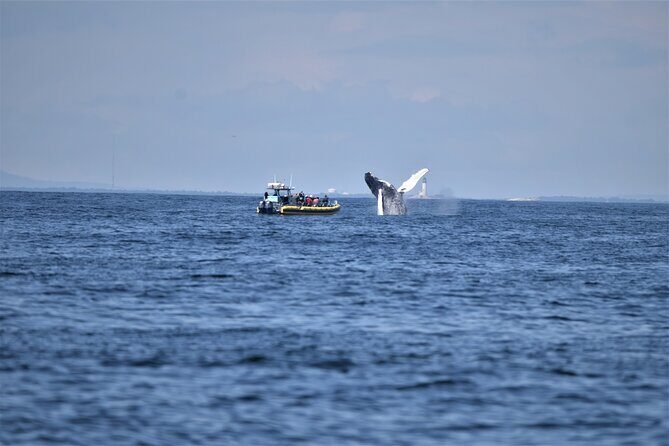
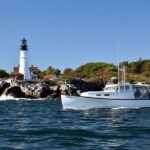
Next up is Halfway Rock Lighthouse, on a barren ledge in Casco Bay. The tower is about 76 feet tall, and the attached ex-boathouse is all that remains from the old setup. Storms removed the other buildings over time, which is a reminder that this coast doesn’t politely sit still.
Halfway Rock’s name is also practical geography. It’s called halfway because the rock is about halfway between Cape Elizabeth and Cape Small, the two extremities of Casco Bay—around 18 nautical miles apart.
This stop is also about 5 minutes with free admission time. Think quick skyline and sea views, not a long walk. It’s one of those places that looks dramatic even when the day is gray. And when you’re about to head out looking for whales, that stark “watching from a ledge” mood fits perfectly.
The drawback? If the weather is rough, it may be chilly and exposed for those few minutes. You’ll be happier if your outer layers are truly waterproof.
The Whale-Watching Stretch: Two Hours Offshore (No Guarantees, Still a Good Bet)
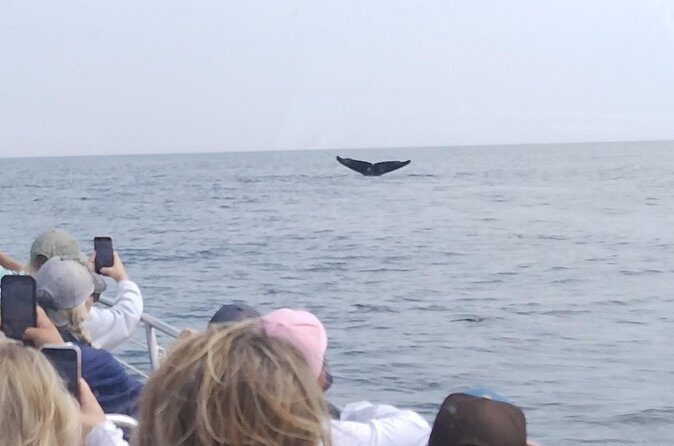
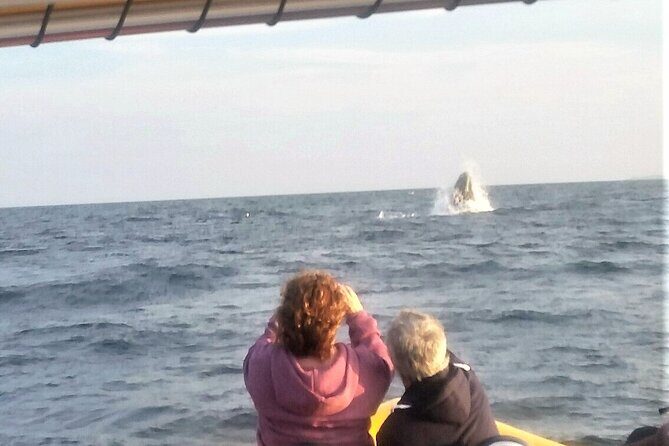
The main event is the whale watching portion: about 2 hours with wildlife time offshore, and admission for that segment is included.
Here’s the honest part: whale sightings aren’t guaranteed. That’s true for every whale watch in Maine. But you can still stack the odds in your favor by understanding what the crew is likely doing out there: scanning for blow locations, watching surface activity, and repositioning when whales show signs.
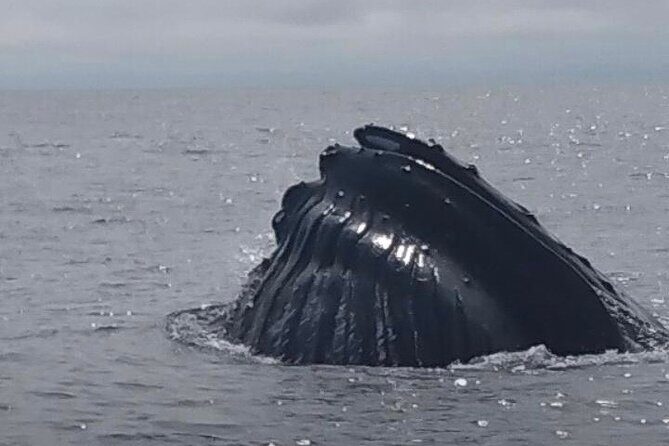
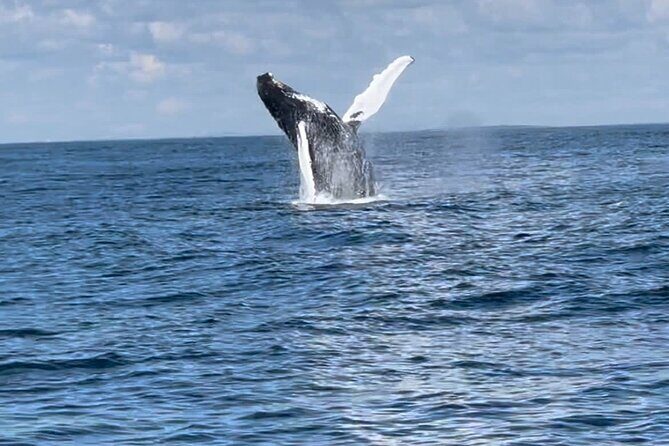
From the sightings people report on this type of trip, you might see fin whales, humpbacks, and Finn whales, plus seals, harbor porpoises, and dolphins. Even when whales are scarce that day, dolphins and porpoises can still make the ride feel alive—quick bursts, lots of movement near the surface.
This is also where the experience format really matters. A high-performance RIB/Zodiac-style boat can keep you closer to where wildlife surfaces, instead of staying far out. That closeness is part of why this tour can feel more exciting than slow sightseeing cruises.
The Boat Ride Reality: Speed, Spray, and Motion-Sickness Math
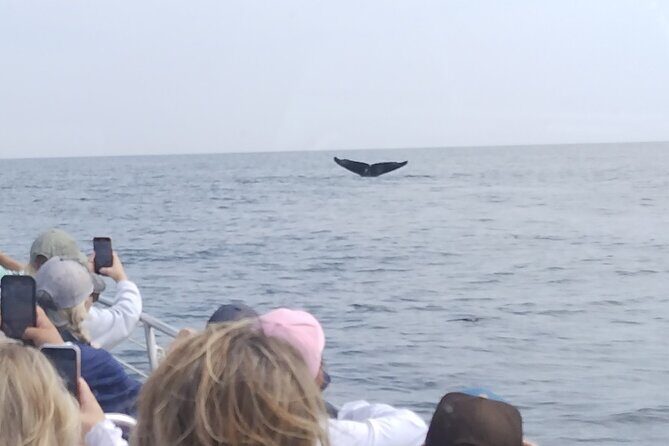
You’re not signing up for a floating living-room. This is a fast, high-performance ride. Some people love that right away. Others need a moment.
Expect cold wind and spray. Even on a decent day, the open water can feel like a wind tunnel. One helpful tip from the experiences people share: bring warm clothes. And if you get one decent gust of spray, you’ll understand why.
There’s also the seating style to consider. Several accounts describe a setup that can involve sitting in a saddle-like way and feeling more “upright” than on a wide, cushy boat seat. That can work well for stability at speed, but it can also mean less comfort for smaller statures. One person even described having to adjust awkwardly due to height and seat shape.
Then there’s motion sickness. If your stomach tends to protest on boats, this format is not the easiest. The ride can get bumpy, and speed plus waves equals more rocking than you’d get on a larger, slower vessel.
My practical advice: dress for the weather, accept that it’s an adventure ride, and if you’re motion-sickness-prone, plan ahead rather than hoping for smooth seas.
- The Real Portland Tour: City and 3 Lighthouses Historical Tour with a Real Local
★ 5.0 · 1,448 reviews
Crew Style and Naturalist Talk: How You Get More Out of 2 Hours
Even if wildlife doesn’t show up the way you hoped, the crew’s job is to keep the trip meaningful. On many departures, that means real marine-life explanations—names of whales, what to look for, and how their behavior affects where you scan.
I like this emphasis because it changes whale watching from pure luck into something you can actively participate in. When the crew is calling out what they’re watching—blows, surfacing patterns, water conditions—you start understanding why the boat turns, why they slow down, and why you might circle an area again.
Some departures include a named naturalist (for example, David), and others highlight captains and staff such as Captain Randy, Chris, and Neil, plus guides like Kate mentioned in separate accounts. When you see those names connected to the trip experience, it’s a sign the team is doing more than driving—they’re also interpreting what’s happening.
And that’s the value: you’re buying a captain’s ability to navigate Casco Bay, plus the crew’s ability to read the water.
Weather Decisions: Why Cancellations Happen (and Why That’s Not a Bad Sign)
This kind of tour depends on sea conditions. When marine forecasts point to unsafe waves, the trip may be canceled. In other words: they’re not gambling with guests’ safety just to preserve a schedule.
That’s the tradeoff with any ocean outing. Some days the forecast is fine until it changes. Other days the decision happens early because the sea state is already too rough.
If you’re worried about losing your day, plan with flexibility. If your itinerary is tight and you’re staying only briefly in Portland, you’ll feel that risk more than someone with extra buffer time.
The good news: they’ve offered refunds in situations where weather forced cancellation, including cases described as high waves or unsafe sea conditions. That gives the experience a safety-first edge instead of a “push no matter what” vibe.
Value: What You Get for a Whale Watch That’s Actually Close to the Water
Let’s talk value in a way that matters. You’re paying for three big things:
- Time offshore: about two hours is long enough to feel like more than a quick photo stop.
- Boat performance: a fast RIB/Zodiac-style vessel can position you for wildlife encounters better than very slow sightseeing boats.
- People and interpretation: when you get a naturalist-style guide or clear on-water explanations, you learn something whether or not whales show.
You also get the land-side value of two lighthouse photo moments—Portland Head Light (1791, Maine’s oldest) and Halfway Rock (the stark ledge story). Those stops make the day feel fuller, not just like a drive to a boat and back.
If you compare this to bigger, calmer cruises, the price-to-value equation shifts based on what you want. If you want comfort first, you might prefer a larger vessel. If you want speed, closeness, and a more “out there” feel, this format often delivers.
Who Should Book This Whale Watching Tour?
This tour is a strong fit for you if:
- you like adventure-style rides and can handle wind and spray
- you’re comfortable with small-group outings (max 14)
- you’re happy to learn on the water and not just watch from a distance
- you want iconic lighthouse scenery added to the whale watch
It may be a weaker fit if:
- you have serious motion sickness issues
- you want a slow, cushy, low-motion cruise
- you’re traveling with very young kids (some accounts note the seating isn’t aimed at the smallest bodies, and there’s an age minimum mentioned as 6 years old)
- you’d be disappointed by the reality that whales might not show on that specific outing
If you’re flexible about wildlife outcomes and you like being on the water, you’ll probably have a good day even when nature takes a day off.
Should You Book Maine Coast Cruising in Portland?
I’d book this tour if your idea of a great Portland Maine day includes ocean wind, fast boats, and a real chance to see whales in Casco Bay. The combination of two lighthouse stops plus two hours offshore is a solid structure. And when the crew brings strong explanations—whether it’s David, Kate, Chris, Neil, or Captain Randy—you come away feeling like the time mattered.
I’d pause before booking if you’re hoping for a guaranteed whale sighting or if you strongly prefer calm water and maximum comfort. This is not a laid-back cruise. It’s a practical, weather-dependent ocean adventure.
FAQ
Where does the tour start in Portland?
The meeting point is 1 Marina Wy, Portland, ME 04101, USA. The activity ends back at the meeting point.
How long is the whale watching tour?
The total duration is about 3 hours 30 minutes, including travel time.
What are the main stops during the trip?
You’ll visit Portland Head Light (about 5 minutes), Halfway Rock Lighthouse (about 5 minutes), and then go to the whale watching point for about 2 hours.
Is the tour language English?
Yes. The tour is offered in English.
Do I need to bring a ticket?
You’ll receive a mobile ticket.
Is whale watching guaranteed?
No. There is no guarantee of seeing whales or other wildlife, since ocean conditions and animal behavior vary.
What should I wear for the boat portion?
You should plan for cold, windy conditions on the open water. Reviews emphasize bringing warm clothes, and the ride can involve spray.
Will the tour run in rough weather?
This experience requires good weather. If it’s canceled due to poor sea conditions, you’ll be offered a different date or a full refund.
What’s the group size limit?
This tour has a maximum of 14 travelers.
You Might Also Enjoy
More Tours in Portland
- The Real Portland Tour: City and 3 Lighthouses Historical Tour with a Real Local
★ 5.0 · 1,448 reviews
More Tour Reviews in Portland
- The Real Portland Tour: City and 3 Lighthouses Historical Tour with a Real Local
★ 5.0 · 1,448 reviews