REVIEW · PORTLAND
Forest Park Carbon Gravel Bike and E-Bike Tour
Book on Viator →Operated by Cycle Portland Bike Tours & Rentals · Bookable on Viator
Portland’s forest ride starts in the city. This 3.5-hour carbon gravel or E-bike tour threads together Old Town, the Pearl, Nob Hill, and then pushes you up into Forest Park for real single-bike fun. The best part is how the route keeps moving, yet still gives you time to look around, especially with guide Charlotte being patient and genuinely upbeat on a conventional bike.
Two things I really liked: first, the mix of neighborhoods before the climb means you get Portland’s street life, not just trees. Second, Forest Park feels like a full-on getaway, but you’re still riding at human speed, with that Leif Erikson Trail gravel under your wheels and big views peeking through.
The main thing to consider is effort and timing: you’ll be climbing up toward Forest Park, and this experience leans on moderate fitness plus good weather—if conditions are off, the tour may shift dates.
In This Review
- Key highlights to know before you ride
- Meet at Cycle Portland and get oriented for a 3.5-hour ride
- Old Town, Pearl District, and Nob Hill: an easy-start Portland sampler
- Up to Forest Park: choose carbon gravel or the battery-assisted climb
- Leif Erikson Trail: the fast gravel that makes you want to keep going
- St Johns Bridge and the ride into North Portland
- Cathedral Park, Mocks Crest, and North Mississippi Avenue culture stops
- Bike style, fitness level, and weather: what can make or break the day
- Who this tour suits best (and who might want another option)
- Should you book this Forest Park carbon gravel and E-bike tour?
- FAQ
- How long is the Forest Park Carbon Gravel Bike and E-Bike Tour?
- Where does the tour start and end?
- What language is the tour offered in?
- What bike options do I have?
- What fitness level do I need?
- How big is the group?
- Are admission tickets included for the stops?
- What happens if the weather is poor?
Key highlights to know before you ride
- A 11-mile Leif Erikson Trail gravel stretch with fast, flowy riding on a former fire lane
- 5000+ acres of Forest Park with towering Douglas Fir and Western Red Cedar along the paths
- St Johns Bridge crossing (1,207 feet) with dramatic arches and a classic Portland photo moment
- North Portland stops designed for breaks at Cathedral Park, Mocks Crest, and Mississippi Avenue
- Small group size (max 12) so you’re not stuck watching a line of bikes vanish in the distance
Meet at Cycle Portland and get oriented for a 3.5-hour ride
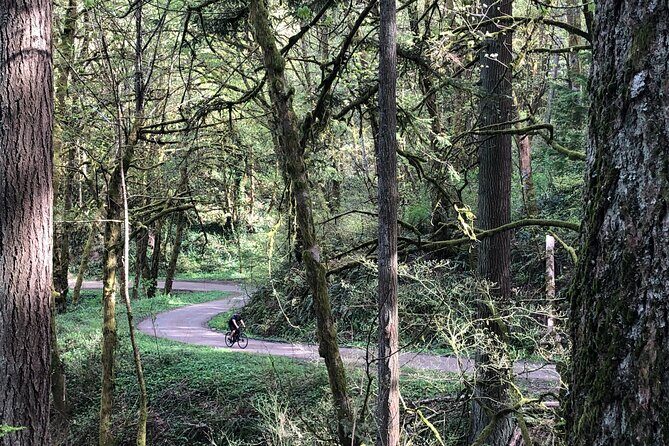
You start at Cycle Portland, 180 NW 3rd Ave. It’s a practical choice because you can line up your day around public transportation, and you’re not scrambling to get to some far-out trailhead before the ride even begins.
From the start, this tour feels planned but not stiff. You get short stops in distinct neighborhoods, then a gradual transition from city streets to hillside riding. With a maximum of 12 people, the pace usually stays manageable, and it’s easier to stay with your guide when the terrain changes.
Time-wise, plan on about 3 hours 30 minutes of moving plus stops. The ride is long enough to feel like an actual outing, but short enough that you won’t need to treat it like a full-day bike trip.
More Bike & E-Bike Tours in Portland

Old Town, Pearl District, and Nob Hill: an easy-start Portland sampler
Before you ever think about Forest Park, you get a strong “start here” foundation of Portland neighborhoods. Stop 1 is Old Town, the city’s oldest neighborhood, where the vibe leans into classic Portland oddities and local favorites.
You’ll see street-level life that mixes food and tea culture, and it’s also where a traditional garden shows up right in the middle of the action. This is a good warm-up stop because you can wander without feeling like you’re losing ride time.
Next is the Pearl District for about 10 minutes. The area used to be warehouse territory, and you can still spot hints of that past in loading docks and cobblestone streets. Then you get the contrast: stylish bars, lofts, and the newer Portland energy sitting right next to old bones.
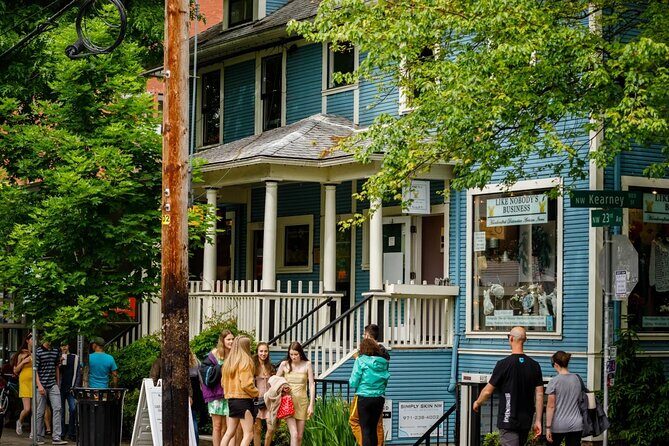
Stop 3 lands you in Northwest (Nob Hill) for another short look. Here, Victorian homes have been repurposed into boutiques, galleries, theaters, and restaurants. It’s the kind of neighborhood where even a quick pause helps you understand why Portland’s streets feel so character-filled.
One practical benefit of these three stops: they break up effort before the climb. Even if you’re nervous about the gravel portion, you’re moving through familiar streets first, so you can settle your grip, your braking style, and your own comfort on the bike.
Up to Forest Park: choose carbon gravel or the battery-assisted climb
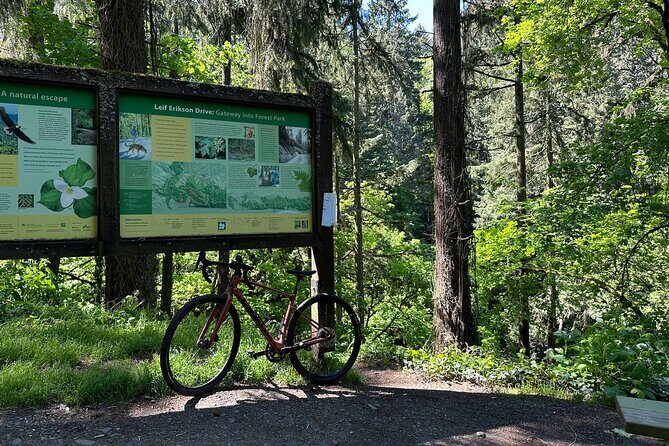
After the city neighborhood sweep, the tour turns into the main event: you climb up toward Forest Park. The route meanders past Victorian homes perched on the hillside, which is a nice transition scene—like the city is slowly giving way to the trees.
Here’s what I’d watch for: the tour is built for people with moderate physical fitness, not couch-to-gravel athletes. Even if you choose the E-bike, the riding still asks you to stay engaged because you’ll be moving steadily and adjusting to road texture and changing gradients.
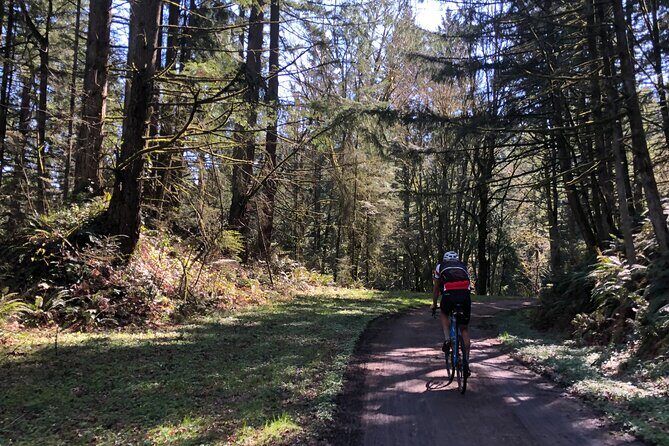
If you’re on a carbon gravel bike, you’ll probably feel most at home when the surface turns to gravel and your tires can roll smoothly instead of absorbing every bump. If you’re on an E-bike, the battery helps with the climb, but you still get the same sense of entering the park and following the trail system.
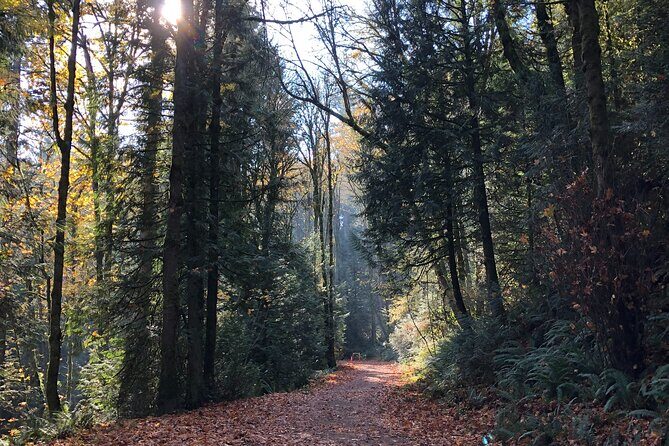
Forest Park itself is where the tour earns its reputation. It’s described as the largest urban forest in the U.S., spanning 5,000+ acres (about 2,000 hectares). You’ll be cycling among Douglas Fir, Western Red Cedar, Oregon Vine Maple, and sword fern—trees and plants that make the whole experience feel like a living system, not just “a park with paths.”
Leif Erikson Trail: the fast gravel that makes you want to keep going
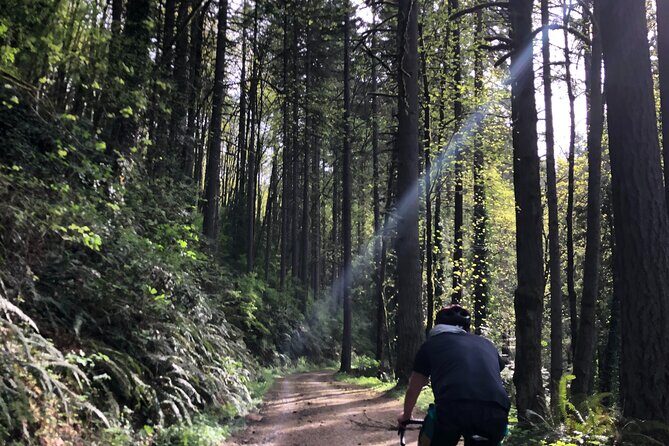
The heart of the ride is the Leif Erickson Trail, running about 11 miles through Forest Park. This is the stop where the tour stops being just sightseeing and starts feeling like biking.
You ride over a bed of gravel described as adventurous and fast, with flowy characteristics on a former fire lane. That matters because fire-lane gravel typically rides more predictably than loose, washed-out trail surfaces. Translation: you get a smoother rhythm, and you can focus on steering and enjoying the forest rather than bracing for every shift in traction.
What I like about this section is how views show up without interrupting the whole forest mood. The itinerary notes epic looks at Portland and the Willamette River through glimpses in the trees. That’s smart design for a bike tour—big payoff, but you’re still surrounded by cover and shade.
Also, this is where the “small group” advantage becomes real. When you’re on gravel, you want your spacing consistent and your pace steady. With a group up to 12, it’s easier for the guide to manage the tempo so the front isn’t sprinting away and the back isn’t stuck waiting for long gaps to close.
You also have a substantial chunk of time here—about 1 hour 30 minutes—so you’re not rushing through what should feel like the tour’s signature.
St Johns Bridge and the ride into North Portland
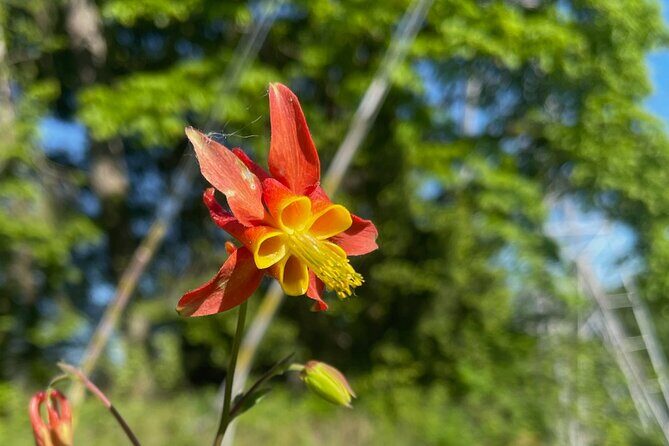
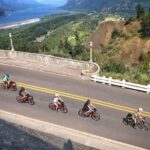
When the trail work is done, you cross a major piece of Portland biking drama: the St Johns Bridge. The span is 1,207 feet, suspended between tall steel Gothic arch towers. It was completed in 1931, and it was the longest suspension-type bridge west of the Mississippi River at the time.
This is more than a photo stop. It functions like a narrative switch: the tour takes you into North Portland, specifically toward the area tied to the former city of St Johns. On a bike tour, crossings matter because they change your sense of scale. You go from tree tunnels to open sightlines, and your brain resets.
The itinerary also frames the bridge as a nautical entrance to Portland. Even if you’re not thinking about ships when you ride over, it helps you understand why locals treat this bridge like a landmark and why it feels important in the overall route.
More Forest Park & Portland Hiking Tours
Cathedral Park, Mocks Crest, and North Mississippi Avenue culture stops
Once you’re in North Portland, you get to slow down and look around at the places that make this side of town feel like its own world.
Stop 5 is Cathedral Park, underneath the St Johns bridge. This matters because you get the bridge above and the park scale below—shade, gardens, and places to pause. It’s also described as one of 14 known Lewis and Clark camp locations within city limits, and that gives the park a deeper context beyond the roses and picnic vibe.
The stop highlights a large rose garden, swimming docks, and picnic opportunities. Even if you don’t plan to swim, it’s useful to know the park is set up for long linger moments, which helps you rest without feeling like you’re just standing around.
After that, the tour includes an open campus private catholic university on the Willamette River bluffs. You’ll get a view-oriented break here, and the setting helps you connect the river to the neighborhoods you’ve just biked through.
Stop 6 is Mocks Crest Property, a simple park on a hill with tree-shaded areas and grassy open spaces. The point is perspective: you get Willamette River views from a place that’s described as a local hangout for picnics.
Finally, Stop 7 is North Mississippi Avenue for about 10 minutes. This is where the tour turns into “what to eat and browse after.” The route notes quirky shopping, restaurants, and music venues. Admission here is listed as not included, but you’re not paying for the street vibe—you’re using this time to orient yourself for your own future exploration.
Bike style, fitness level, and weather: what can make or break the day
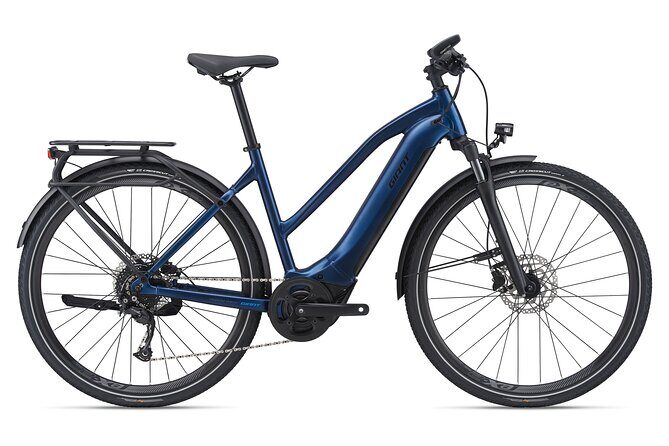
The tour is flexible in bike choice: carbon gravel bike or E-bike. That’s a big deal because it lets you match the ride to your comfort. If you’re a newer cyclist, E-bike support helps with the climb up toward Forest Park. If you’re confident on gravel, the carbon bike choice lets you enjoy the ride texture more directly.
What you should not ignore is the “moderate fitness” note. The itinerary includes climbing up into Forest Park and then riding through a longer gravel section. In other words, you’re not just cruising—your legs will be doing work at some point.
Weather is also key. The tour notes it requires good weather, and if it’s canceled due to poor conditions, you’re offered a different date or a full refund. For Portland, “good weather” can mean different things day to day, but for gravel rides, wet surfaces can make everything feel slower and less predictable.
Finally, group size helps. With a maximum of 12, you’re more likely to feel like you’re riding together instead of being swallowed by a crowd.
Who this tour suits best (and who might want another option)
I’d call this a strong fit if you want a Portland mix without planning multiple separate outings. You get neighborhood texture in Old Town, Pearl, and Nob Hill, then you get a real green ride in Forest Park, and you finish with North Portland culture around Cathedral Park and Mississippi Avenue.
You’ll enjoy it most if you’re comfortable riding a bike for a few hours and handling transitions between city pavement and gravel. If you’re nervous about climbs, choose the E-bike and keep your effort steady rather than trying to prove anything on the steep bits.
It’s also a good pick for people who like guided context. This isn’t just “ride and go.” You get park context (Forest Park’s size and tree types) and landmark context (St Johns Bridge’s stature and completion year, plus Cathedral Park’s Lewis and Clark link).
Should you book this Forest Park carbon gravel and E-bike tour?
Book it if you want the best of Portland in one tidy loop: city neighborhoods first, then Forest Park on gravel, then North Portland with views and places to linger. The fact that the ride includes a signature trail stretch and a famous bridge crossing makes it feel like more than a casual “scenic ride.”
Skip or adjust your plan if you’re worried about any uphill work, because the route is designed to climb into the park and you’ll be actively riding through gravel terrain. Also take weather seriously—this experience depends on conditions being right for both comfort and traction.
If you like routes with structure but not stiffness, and you care about getting good value from your time (lots of stops with free admission listed, plus standout terrain), this one’s an easy yes.
FAQ
How long is the Forest Park Carbon Gravel Bike and E-Bike Tour?
It runs for about 3 hours 30 minutes.
Where does the tour start and end?
It starts at Cycle Portland, 180 NW 3rd Ave, Portland, OR 97209, and it ends back at the meeting point.
What language is the tour offered in?
The tour is offered in English.
What bike options do I have?
The experience offers a choice between a carbon gravel bike and an E-bike with battery support.
What fitness level do I need?
You should have a moderate physical fitness level.
How big is the group?
The maximum group size is 12 travelers.
Are admission tickets included for the stops?
The itinerary lists admission as free for multiple stops, while North Mississippi Avenue is marked as not included.
What happens if the weather is poor?
The tour requires good weather. If it’s canceled due to poor weather, you’ll be offered a different date or a full refund.
You Might Also Enjoy


More Tour Reviews in Portland
- The Real Portland Tour: City and 3 Lighthouses Historical Tour with a Real Local
★ 5.0 · 1,448 reviews